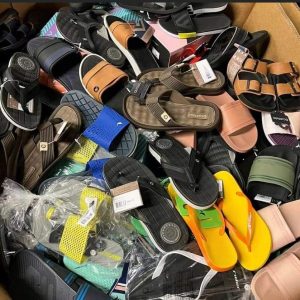
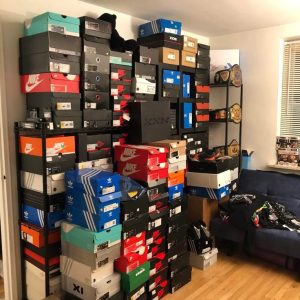
Shoe Pallets For Sale?
Yes. Shoe pallets for sale are simply large, bundled quantities of footwear packaged for bulk movement, fundamentally changing the economics for resellers. They represent a significant shift from the typical retail or small wholesale model. While buying individual pairs means paying a premium for sorting and selection, buying a full pallet transfers the selection and sorting labor to you in exchange for a drastically reduced price per unit.
A typical footwear pallet might contain anywhere from 100 to 300 pairs of shoes, often packed one on top of the other, wrapped, and secured.
The value is heavily influenced by the condition, often classified by grading styles:
-
Grade A (New/NIP): Brand new, in original packaging, often overstock or end-of-line clearance.
-
Grade B (Returns/Shelf-Pulls): Customer returns that appear unused, or stock pulled from store shelves. Packaging may be damaged.
-
Grade C (Used/Damaged): Heavily discounted stock, likely to be used, require cleaning, or have minor defects.
Major buyer types, such as market traders who require constant stock rotation, online sellers focusing on liquidation sneakers for platforms like eBay, and large exporters looking for container volumes, are driven to pallets for the sheer volume and low unit cost. When comparing suppliers, you must always look beyond the headline price. Key factors include the level of manifest detail (a list of exactly what is included), the minimum order quantity (MOQ), and whether collection or delivery options are offered.
If you are ready to stop leaving money on the table, it is time to move to the pallet model. Shoe pallets for sale are a fast-moving commodity. Therefore, we encourage readers to contact our sales team or submit a quote request when they are ready to compare different available stock and secure your inventory before the best lots sell out.
What Are Mixed Shoe Pallets?
Mixed shoes pallets are defined as bulk loads combining a wide array of brands, styles, genders, and seasonality within one single pallet. They are the definition of a varied inventory.
These pallets are incredibly useful for resellers who are either testing new markets or selling across multiple platforms. By having a mixed load, you can gauge customer demand for high heels, winter boots, and summer trainers all at once without having to commit capital to massive runs of a single model. This is particularly valuable for newer resellers aiming to find their niche.
Typically, pricing for mixed pallets is calculated in one of two ways:
-
Per Pair: A fixed price, such as £10 per pair, applied regardless of the retail value of the shoe. This simplifies profit planning immensely.
-
Per Pallet: A single lump sum price, such as £1,500 for a 150-pair pallet. This requires the buyer to calculate the average per-pair cost but often offers greater overall savings.
A smart reseller treats a mixed pallet as a research opportunity; the variety is the value, not just the shoes themselves.
Are Used Shoe Pallets Worth Considering?
Yes, used or second hand shoe pallets are absolutely worth considering, especially for buyers focused on the budget market or unique, vintage finds. They are distinct from the “New Surplus” or “Customer Returns” categories.
The primary advantage of used shoe pallets is their incredibly low acquisition cost, which can sometimes be as low as £1 per pair. This creates a massive margin buffer. Furthermore, they can contain unique, desirable, or vintage one-off styles that are impossible to find in new liquidation stock.
However, key risks must be managed to protect your margins:
Used pallets are best suited for resellers who have efficient cleaning and refurbishment processes in place. The extra labor is the cost of the exceptional margin potential.
How Does Shoe Pallet Liquidation Help Resellers?
Shoe pallet liquidation is a vital part of the retail supply chain, essentially acting as the official clearance channel for major retailers and brands. It is the process by which excess or unwanted inventory moves from the original seller to the wholesale buyer or exporter.
Liquidation helps resellers by providing access to high-quality inventory at a fraction of the wholesale cost. These liquidated shoe pallets can include globally recognized labels, items from seasonal overstock, and large volumes of store or Amazon returns that the original retailer cannot economically re-shelf. This means you can secure stock that originally sold for £50 to £200 for a few pounds per unit.
Before purchasing liquidation stock, sensible checks must be performed. The two most critical checks are:
-
Grading Rules: Do the supplier’s grading rules clearly define “B-grade” versus “C-grade”? A lack of clarity can lead to unexpected levels of wear or damage.
-
Packaging Condition: For online resellers, the condition of the original shoeboxes matters. Intact, clean boxes can significantly increase the final resale value.
By understanding the liquidation process, you are positioning yourself to acquire premium stock efficiently.
What Are Shoe Liquidation Pallets?
Shoe liquidation pallets are simply bulk loads of footwear sourced from the end of the retail cycle, specifically aimed at being sold off rapidly. They differ from regular wholesale pallets because they often contain an un-manifested or partially-manifested mix, reflecting the rapid nature of clearance.
Common sources for these high-value liquidation pallets include:
-
Closed retail stores needing rapid clearance.
-
Large volumes of unsorted online returns (from platforms like Amazon UK).
-
Cancelled large-scale retail orders.
-
End-of-line stock for models that will not be restocked.
Buyers should use manifests or sample boxes as their primary tool to judge quality before committing to a full pallet load. A sample box offers a small, representative collection of the pallet’s contents, allowing you to physically inspect the quality and grading before purchasing the full load. If the supplier does not offer this, request detailed photographs and video of the exact pallet you will be receiving.
What Is Typically Included In A Shoe Pallet Liquidation?
A shoe pallet liquidation is not a uniform product; its contents are determined by the source. However, a typical mixed pallet will contain a broad and useful range of footwear that can satisfy diverse customer bases.
The types of footwear often found include:
-
Trainers (Sneakers): Athletic shoes, often including running shoes and lifestyle sneakers.
-
Boots: Winter boots, ankle boots, and work boots.
-
Sandals and Flats: Seasonal summer footwear.
-
Formalwear: Heels, dress shoes, and smart office footwear.
It is crucial to understand that contents may include multiple sizes, colours, and a high percentage of customer returns. This mix matters profoundly for resale planning; for instance, a pallet dominated by size 12 men’s shoes may be harder to move than a balanced mix of sizes 6 to 10. Always check the size distribution listed on the manifest.
Additionally, advise readers to check for accessories like original boxes, dust bags, or tags. These additions, even for B-grade items, can increase resale appeal and value significantly, as they enable higher pricing on platforms like Vinted or Depop. For example, the presence of an original box can increase a shoe’s resale value by 15% to 25% (see research on product packaging and resale value conducted by the Journal of Marketing Research).
Why Are Nike Shoe Pallets Popular With Wholesale Buyers?
Nike shoe pallets are immensely popular with wholesale buyers, and the reason is simple: instant, global brand recognition and guaranteed resale demand. Nike, like other top-tier brands, maintains a massive, loyal global fan base. Their constant release of new models and limited-edition runs creates an inherent scarcity that drives secondary market prices.
Branded pallets can command a higher per-pair price, directly translating to superior potential margins for the reseller. A focused Nike shoe pallet often offers a better return on investment than a broader branded sneaker pallet that might include Nike, Vans, and other sports labels, provided you can handle the higher upfront cost.
If you are serious about capitalizing on the sneaker market, securing branded stock is paramount. Therefore, we invite visitors to reserve limited Nike shoe pallet allocations or request a current branded stock list using our clear contact form. Stock moves daily, and securing high-demand brands requires swift action.
How Do UK Liquidation And Amazon Return Pallets Connect To Shoe Pallets?
The connection between general liquidation pallets UK, Amazon return pallets, and dedicated shoe pallets is the source of the inventory. Essentially, dedicated shoe pallets are a curated sub-set of the larger liquidation stream.
Large liquidators often acquire massive mixed-category loads from major retailers, including major online platforms. They then sort these loads into specialized, homogeneous categories for easier sale: clothing pallets, electronics pallets, and shoe pallets for sale.
-
Mixed Category Returns Pallet: This might contain anything from a kettle and a dress to five pairs of shoes. These are often cheaper upfront but require significantly more sorting and testing time.
-
Pure Footwear Pallet: This is the curated version, containing only shoes and related accessories. While the cost per pallet is higher, the per-hour labor cost is lower because you spend less time sorting irrelevant items.
The typical differences in grading are also important: online return pallets (like those from Amazon) often have pristine packaging but are frequently open-box returns, meaning they may be functionally new but cannot be sold as “new in box” by the retailer. In contrast, in-store clearance pallets often feature slightly damaged packaging due to physical handling.
How Do Clothing And Footwear Export Containers Support Buyers Of Shoe Pallets For Sale?
Clothing and footwear export containers are the ultimate solution for large-volume international buyers. These containers bundle multiple shoe pallets for sale along with garments for overseas markets, particularly those in Africa, Eastern Europe, and developing economies.
The primary advantage of consolidating pallets into full containers is the massive reduction in the freight cost per unit. Shipping a single pallet can cost £100-£300, but when spread across 20-30 pallets in a single container, the per-unit freight cost drops dramatically, enhancing global competitiveness.
Export-focused buyers must structure loads with attention to regional demand, climate, and customer preferences. For instance:
-
Hot Climates: A load should be weighted heavily toward sandals, trainers, and light canvas shoes.
-
Colder Climates: Buyers should focus on winter boots, leather shoes, and formal footwear.
This scale of purchasing is often tied to official bodies for customs and export compliance. Buyers should consult resources like the official UK Government website on exporting goods to ensure full compliance with international trade regulations.
Why Does Indetexx Appeal To Buyers Of Second Hand Branded Shoes?
Indetexx and similar global suppliers specialize in the processing and sorting of second hand branded shoes, which are distinct from new liquidation stock. These suppliers are appealing because they offer recognized, high-quality labels at an acquisition cost significantly lower than even Grade C liquidation stock.
These specialized suppliers handle the critical quality control, grading, and sorting. They often use manual sorting lines where experienced staff grade shoes into categories like Grade A (Like-New), Grade B (Good Wear), and Grade C (Heavy Wear), ensuring traders receive a consistent product that is ready for cleaning or immediate resale. This high level of sorting is what differentiates a professional used shoe supplier from general scrap dealers.
How Second Hand Shoes Complement New Shoe Pallets
Retailers can achieve a comprehensive market offering by strategically mixing second hand branded shoes with new surplus stock. This is a common and highly effective merchandising strategy used by successful online and physical stores.
Mixing stock allows retailers to offer a broader, multi-tiered price range, effectively capturing varied customer budgets:
-
High-End Customer: Offered new, A-Grade liquidation trainers.
-
Mid-Range Customer: Offered B-Grade returns or high-quality, pre-loved branded shoes.
-
Budget Customer: Offered C-Grade, slightly worn shoes at rock-bottom prices.
Practical merchandising ideas for displaying this mix include:
-
“New Arrivals” Section: Dedicated to A-Grade liquidation stock.
-
“Premium Pre-Loved” Section: Dedicated to high-quality second hand branded footwear, clearly labeled to manage customer expectations.
-
“Clearance/Final Sale” Section: Reserved for deeply discounted C-Grade and heavily-used inventory.
By catering to every price point, retailers can maximize sales across the entire inventory spectrum from their shoe pallets for sale.
How Brand Shoe Mix Lots Differ From Standard Pallets
Brand shoe mix lots are highly curated bundles that group multiple pairs of branded footwear (like a mix of Nike, Puma, and Adidas) within a single, smaller offer, usually 25 to 50 pairs. They differ significantly from standard unbranded or supermarket label pallets.
These bundle-style offers are typically used for specific, high-impact retail strategies:
-
Flash Promotions: Using the branded lots as a quick draw to attract customers.
-
Auctions: Selling the lots as premium collections on auction platforms.
-
Loyalty Deals: Offering the lots as high-value, exclusive wholesale deals to regular clients.
The key benefit is that a reseller can obtain high-value, branded inventory without committing to the financial outlay and storage space required for a full shoe pallets for sale load.
Where Can You Find Baby Shoes Wholesale Lots In Shoe Pallets?
Baby shoes wholesale lots are generally supplied in one of two ways: either as dedicated, specialized pallets containing only infant and children’s footwear, or as distinct, segregated sections within broader liquidation loads.
Baby footwear offers an attractive revenue stream due to several unique factors:
-
Repeat Purchases: Children grow quickly, necessitating constant repurchase of new sizes.
-
Steady Demand: The birth rate creates consistent demand in nearly all regions globally.
-
High-Value Consignment: High-quality, brand-name baby shoes sell very well on consignment platforms.
When evaluating these lots, highlighting specific details is important for buyers: age ranges (newborn to toddler), fastening types (Velcro versus laces), and materials (ensuring they are safe, non-toxic, and suitable for infants) must be checked. For official information regarding children’s product safety standards, buyers should reference official governmental resources, such as those provided by the Consumer Product Safety Commission (CPSC) in the United States or relevant bodies in the UK, regarding the safety of footwear and clothing for children.
How Do Footwear Wholesalers Support Shoe Pallet Buyers?
The role of a professional footwear wholesaler is to act as the crucial intermediary, sourcing, grading, and supplying shoe pallets for sale for various business models. They bridge the gap between massive retail clearances and the independent reseller.
A dedicated wholesaler offers key support mechanisms to help buyers grow their resale operations:
-
Dedicated Account Managers: Providing personalized service to help match the right pallet to the buyer’s niche (e.g., finding the best UK returns stock for a local market seller).
-
Stock Alerts: Notifying buyers the moment highly sought-after pallets, such as new Nike loads, become available.
-
Tailored Offers: Structuring bulk deals and pricing specifically for your resale volume.
Transparent communication about manifests, lead times, and repeat ordering possibilities is the foundation of a successful long-term relationship. A reliable wholesaler views your success as their own and is key to a steady inventory supply.
What Should You Ask Wholesalers Before Purchasing Shoe Pallets?
Yes, there are critical questions that must be asked before any major purchase of shoe pallets for sale. Asking these questions protects your investment and minimizes risk.
Key questions to ask the wholesaler:
-
What are the exact grading descriptions for this specific pallet (e.g., what does “Grade B” actually mean in terms of wear)?
-
What is the specific size breakdown included in the pallet?
-
What is the expected delivery schedule and associated freight cost to my location?
Yes, buyers should absolutely request sample images, manifest summaries, or inspection visits before major purchases. While manifest summaries do not detail every item, they often list the high-value items and provide a strong indication of the pallet’s overall quality.
Finally, negotiating terms can yield significant benefits. Buyers should suggest how to negotiate terms such as minimum quantity discounts, flexible payment conditions (e.g., a deposit and balance upon delivery), and possible loyalty incentives for repeat orders. Negotiating even a 5% discount on a £3,000 pallet immediately enhances your profit margin.
Frequently Asked Questions About Shoe Pallets For Sale
How Can You Find Reliable Suppliers Offering Shoe Pallets For Sale?
Finding a reliable supplier involves thorough vetting. Yes, you should always start by looking for wholesalers who:
-
Offer physical inspection appointments or video tours of the pallets.
-
Provide clear company registration details, preferably with an established history (check official government business registries).
-
Can provide testimonials or case studies from other resellers.
-
Are transparent about their liquidation source (e.g., official Nike liquidator or Amazon UK surplus).
What Should Resellers Expect When Buying Shoe Pallet Liquidation Stock?
Resellers should expect a mix of quality. No, you should not expect every pair to be A-Grade. Instead, expect a distribution where:
-
10% to 20% are likely A-Grade (New/Near New).
-
50% to 60% are B-Grade (Wearable, minor returns, shelf pulls).
-
20% to 30% are C-Grade (Need cleaning, minor repairs, or suitable for parts/scrap).
Your profit is made by efficiently handling the middle and lower grades, turning a small investment of time into a significant return. You should also expect potential sizing imbalances and a mix of seasonal inventory, which is the nature of buying unsorted liquidation footwear.
Are Second Hand Branded Shoes Always Found In Separate Pallets?
No, not always. While large, specialized suppliers will offer dedicated second hand branded shoes pallets, smaller loads or clearance sales often mix in used, pre-owned sneakers with new liquidation stock, particularly in unsorted Amazon returns. Always clarify the percentage of used stock with the supplier before buying.
Is It Better To Buy Full Truckloads Instead Of Single Shoe Pallets For Sale?
Yes, from a pure cost-per-unit perspective, buying full truckloads (often 20 to 26 pallets) is more cost-effective. The freight cost is drastically reduced, and liquidators often offer an additional percentage discount for taking the entire load. This option is primarily for very large wholesalers or exporters.
Can I Find Designer Heels And Formal Footwear In These Liquidation Lots?
Yes, designer heels, leather boots, and other formal footwear are often included in high-end clothing liquidation or department store clearance pallets. However, if your focus is exclusively on this category, you should ask for manifests from luxury or high-street retailers, as mixed pallets tend to be dominated by trainers and casual shoes.
What Are The Risks Associated With Buying Unmanifested Footwear Pallets?
The primary risk with unmanifested shoe pallets for sale is that you are buying sight unseen. You risk a high percentage of undesirable sizes (e.g., tiny children’s sizes or very large men’s sizes) or excessive C-Grade stock. While the price is lower, the risk is higher. Buyers should aim for at least a summary manifest that details the source and general quality grade.
Where Do Most UK Returns Pallets Of Shoes Originate?
Most UK returns pallets originate from major online retailers and department stores that offer generous return policies. These companies prefer to liquidate the returned stock rather than spend resources inspecting and re-shelving thousands of individual shoes. This results in a high volume of near-new, B-Grade stock available to the liquidation market.
Related products
-
Foot Wear PALLETS
Buy Foot Locker Liquidation Pallets For Sale (250+ Pairs From £1,480)
£1,480.00 Add to cart -
Foot Wear PALLETS
On Cloud Shoes Pallet Wholesale In UK –(45–60 Pairs/Pallet – £680)
Original price was: £1,360.00.£1,200.00Current price is: £1,200.00. Add to cart