
Pallet Liquidation In Washington And How To Source Profitable Bulk Inventory
Most resellers learn an expensive lesson the hard way: by buying a mystery pallet with money they cannot afford to lose. The photo looks good, the manifest looks even better, and then you find a shrink-wrapped stack of untested returns in your driveway. Pallet liquidation in Washington can be profitable, but only if you buy based on expected recovery value rather than advertised retail value. This guide covers how the supply chain functions, where to buy in the Seattle area, how auctions are priced, the legal requirements in Washington, and how freight can eat into your profits.
Table of Contents
Request A Retail Or Bulk Quote In Washington
Need wholesale pallets in Washington? Request a free retail or bulk quote today. We’ll provide competitive pricing, available inventory, and shipping options within 24 hours.
Fast Shipping And Logistics
- Orders typically ship within 2–4 business days.
- FTL and LTL shipping available across the U.S. and selected export destinations.
- Pallets are securely wrapped for safe delivery, with manifests available upon request.
- International shipping quotes are available for port or direct freight delivery.
-
Foot Wear Pallets
Buy Gucci Liquidation Pallets: From $2,450 | Luxury Lot
$2,850.00Original price was: $2,850.00.$2,450.00Current price is: $2,450.00. Add to cart -
CLOTHNG PALLETS
Buy Gymshark Wholesale For Sale (300+ Pieces From $1,450)
Rated 4.33 out of 5$1,850.00Original price was: $1,850.00.$1,450.00Current price is: $1,450.00. Add to cart -
CLOTHNG PALLETS
Buy Halara Wholesale Pallets For Sale: From $1,875 | Lot
$1,875.00 Add to cartRated 4.50 out of 5



Key Takeaways
- Pallet liquidation means buying overstock, shelf pulls, closeouts and customer returns in bulk, then reselling the units individually.
- Judge every load on delivered cost per sellable unit, never on the manifest retail total.
- Washington resellers generally need a state business licence and a Department of Revenue reseller permit before suppliers will open an account.
- Business and occupation tax is charged on gross receipts, so tax can be owed on a load that lost money.
- Freight, liftgate and residential delivery surcharges routinely decide whether a pallet is profitable.
- Buy one small lot from any new supplier and measure your real sell-through before scaling.
Pallet Liquidation In Washington
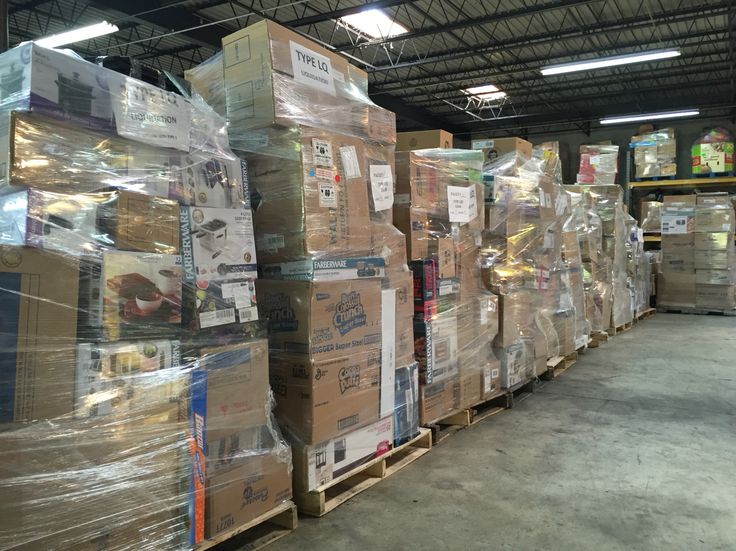
Pallet liquidation involves the bulk resale of merchandise that a retailer no longer wants on its shelves. There are four sources of stock: overstock that never sold, shelf pulls with damaged packaging, closeouts from discontinued lines and customer returns processed through reverse logistics centres.
Most of this stock never returns to the shelves. Inspecting, repackaging and restocking a single low-value item can cost more than the item is worth, so retailers sell it by the pallet or truckload to processors in the secondary market instead.
Four buyer groups dominate the resale end of the market: These are part-time flippers who list on online marketplaces; bin store owners who need a constant supply of fresh stock; category specialists who build single-SKU inventories; and small retail start-ups that stock a shop without wholesale credit.
Washington is well suited to this trade for a structural reason: goods move through it in large quantities. Port activity around Seattle and Tacoma, regional distribution centres and national chains with warehouses in the north-west all generate surplus locally. Buying from a warehouse in Washington, Oregon or Idaho avoids the long-haul freight penalty that reduces buyers’ margins in remote regions.
However, pricing varies too much by category, condition, and season for any published range to be reliable. Treat every advertised price as a starting point and calculate the cost per unit yourself using the method explained further down this page.
How Does Pallet Liquidation Work In Washington?
The chain has three stages. A retailer or manufacturer offloads surplus stock. A secondary market processor then sorts, grades and repalletises the goods. Finally, an end buyer purchases the goods by the pallet, partial truckload or full truckload.
Two words determine most of your risk: A manifested load comes with an itemised list of products, quantities and retail values. An unmanifested load comes with a category description and a photograph. Manifested loads cost more but remove the guesswork. Unmanifested loads are cheaper but far more variable.
A manifest tells you what is in the box. However, it does not indicate the condition of the items. Always read the manifest alongside the condition grade, because the same SKU list could refer to either sealed overstock or a pile of untested returns.
| Condition grade | What it usually means | Practical outcome |
|---|---|---|
| New or overstock | Sealed, unsold retail stock | Highest and most predictable sell-through |
| Shelf pull or like new | Opened or damaged packaging, product intact | Strong, minor repackaging needed |
| Mixed returns | Untested customer returns | Highly variable, testing required |
| Salvage | Damaged, incomplete or parts only | Low, suits repair and parts sellers only |
Changes in order size also affect the economics. A single pallet is a test purchase. A partial truckload reduces the price per pallet while keeping freight costs manageable. A full truckload offers the lowest unit cost, but requires you to have a loading bay, the necessary equipment, storage space, and the financial resources to hold inventory for several months.
Where Can You Find The Best Liquidation Pallet Stores In Seattle, Washington?
The most useful options in the Seattle area are bin stores and warehouse storefronts, where you can physically inspect goods before paying for them. This removes the largest variable in this business: condition.
Bin stores operate a weekly price ladder. Prices per item start at their highest on restock day and drop each day until the bins are empty. This creates two distinct shopping strategies: shop on restock day if you are looking for branded or higher-value items, or shop on the final day if you are looking for cheap items in bulk.
As independent storefronts frequently open and close, verify the location of any store before driving there. Search the business name on the Washington Secretary of State’s business entity search tool to confirm that the store is a registered, active entity. Then phone the store to confirm restock day and inspection policy.
Buyers willing to drive should widen their search radius beyond the city. Lynnwood, Tacoma, North Bend and Vancouver are all within a reasonable driving distance of the Seattle metropolitan area and often work with different upstream suppliers, meaning a different product range each week. The single highest-return question you can ask a storefront is to call ahead and ask which day the truck arrives.
Which Liquidation Stores Near Washington, District Of Columbia Are Worth Visiting?
The search results constantly conflate two places: Washington State in the Pacific Northwest and Washington, District of Columbia, on the East Coast. Before booking travel or requesting a freight quote, check the location field on the listing.
The two markets have different product mixes. The dense population and high volume of e-commerce returns on the East Coast tend to push apparel, small electronics and household goods into that region’s storefronts. In contrast, Northwest loads more often carry outdoor gear, tools, and home improvement stock.
Only compare regions on delivered cost. Take three comparable listings from each region, add the full freight quote to your address and then divide by the sellable unit count. A cheaper East Coast pallet often becomes more expensive once cross-country freight is added.
How Do Liquidation Auctions For Washington Buyers Work?
Business-to-business auction platforms allow retailers and processors to list surplus stock directly from regional warehouses, which is then bid on by approved buyers. If you win a lot, you must arrange collection or freight yourself.
Registration is rarely instant. Most platforms verify that you are a genuine reseller before granting you bidding approval.
- Create a buyer account with full business details.
- Upload your Washington business licence or reseller permit.
- Provide your federal EIN or equivalent tax identification.
- Wait for manual approval, which commonly takes one to three business days.
- Add a payment method before your first bid closes.
The final cost is determined by three factors. A reserve price is a hidden minimum price below which the lot will not be sold. A buyer’s premium is an additional percentage added to your winning bid. A closing window often extends automatically when a late bid is made, which is how disciplined bidders can end up spending more than they intended.
Auctions are better than fixed-price wholesale when there is a high supply and low demand. Fixed prices are better when you need a specific category on a schedule. Experienced buyers use both: auctions to take advantage of opportunities and fixed-price suppliers to maintain baseline stock levels.
What Should You Know Before Bidding On Washington Liquidation Auctions?
Work out your delivery costs per sellable unit before you bid, not after you have won the contract. Include every fee in the calculation.
| Cost line | Where it appears | Notes |
|---|---|---|
| Winning bid | Auction platform | Your controllable variable |
| Buyer premium | Added at checkout | A percentage of the bid |
| Freight or pickup | Carrier or your own vehicle | Quote before bidding |
| Liftgate and residential fees | Carrier invoice | Applies without a loading dock |
| Handling and wrap charges | Warehouse | Ask for these in writing |
Add up the values in those five lines, then divide by the number of units you realistically expect to sell, rather than the total number of units. A common planning assumption is that around a third of a mixed returns load will be unsellable at full price. Use this figure as a placeholder only until you have processed two or three loads and can calculate your own, supplier-specific rate. This is an assumption, not an industry average.
Hypothetical example. A reseller sets a ceiling on a 300-unit mixed home goods lot. They assume 200 units will sell at a usable price, add premium and freight to the bid, and divide the total by 200 rather than 300. That single adjustment drops their maximum bid by a third and is usually the difference between a profitable and a break-even load.
Never anchor to the manifest retail value. Instead, anchor to the expected recovery value, i.e. what the goods will realistically fetch on your channel after deducting platform fees, shipping costs and returns.
What Can You Buy At A Discount Liquidation Depot Or Discount Liquidation Wholesale Outlet?
Depots and discount wholesale outlets stock popular physical goods such as homeware, small appliances, furniture, seasonal decorations, hardware, tools, pet supplies and general merchandise. Electronics appear less frequently, but sell quickly when they do.
The model runs on weekly truckloads. New stock arrives, the initial price is set at the top tier, and this drops throughout the week until the stock is sold and the depot is cleared for the next delivery.
Use case. A bin store owner in Pierce County needs volume rather than individual high-value finds. Shopping late in the depot’s cycle and buying by weight or by the bulk lot fills bins cheaply, accepting that the best items were already picked. The limitation is obvious: this route never produces high-margin single items, so it only works for a business model built on volume and footfall.
Repeat buyers and registered business accounts often receive quantity discounts or early access to incoming stock. Rather than asking about a business account on your first visit, ask about it on your second or third visit, once the staff recognise you as a regular buyer.
Which Sourcing Route Fits Your Situation? A Quick Branching Quiz
Answer honestly, then follow the path. This is a planning aid, not business, tax or legal advice.
Question 1: Have you completed and sold through a full pallet before?
- No, this is my first purchase, go to Question 2.
- Yes, one to five loads, go to Question 3.
- Yes, more than five loads, go to Question 4.
Question 2: Do you have a garage or spare room and a way to move 300 pounds without help?
- No. Start with case lots or a single small-lot purchase from a local storefront where you can carry goods in your own vehicle. Read the bulk lot marketplaces section.
- Yes. Buy one manifested single pallet with local pickup. Avoid unmanifested loads entirely until you have measured your sell-through.
Question 3: Is your problem inconsistent stock or thin margin?
- Inconsistent stock. Add a wholesale distributor for your proven sellers and keep liquidation as a supplement. Read the wholesale comparison section.
- Thin margin. Move to auctions and apply the delivered cost worksheet before every bid.
Question 4: Do you have dock access, equipment and cash to hold inventory for 90 days?
- Yes. Partial or full truckloads will give the lowest unit cost.
- No. Stay on pallet-level buying. Truckload economics disappear when you pay for storage and handling you do not own.
Which Pallet Sourcing Platforms Are Best For Washington Resellers?
There are three main differences between specialist pallet suppliers: category focus, minimum order size, and whether they deliver to residential addresses with liftgate service. First, match the supplier to your storage and access situation, and second, to your product niche.
Companies frequently mentioned in this sector include Pallet Liquidation Depot, Pallet LQDS and Pallet Spot. Their current categories, minimum order sizes and shipping terms change frequently, so mentioning them here does not constitute an endorsement. Always confirm every detail in writing directly with the supplier before paying.
Advance-payment fraud is a genuine risk in this category, so verify before you transfer money. The FTC’s guidance on avoiding common scams is a useful baseline. Apply this checklist to any new supplier:
- Search the company name alongside the words review, complaint and refund.
- Confirm reviews exist on independent platforms, not only on the supplier’s own site.
- Request a single-pallet or sample order before committing to a truckload.
- Read the refund, shortage and damage policy in full before paying.
- Get freight terms in writing, including liftgate and residential delivery.
- Avoid suppliers who insist on wire transfer, cryptocurrency or gift cards.
If a supplier refuses a small test order, they are telling you something useful. Established companies want repeat customers and are usually happy with an initial small purchase.
What Do General Liquidators Such As UpLiquidation And American Liquidators Offer?
Full-service liquidators purchase entire warehouse inventories, stock from store closures and bankruptcy stock, and then sell it on in bulk. Operating further up the chain than pallet-only sellers changes what they are useful for.
The advantage for buyers is consistency. A liquidator with ongoing relationships with retailers can often supply the same product category month after month, which is something that pallet marketplaces rarely manage to do. This is important if you sell on a channel where running out of stock means losing visibility.
Liquidators can also work in reverse. Businesses use liquidators for asset recovery, warehouse clear-outs, and end-of-lease disposal — information that could be useful if you ever need to offload dead stock. As above, these companies are mentioned for illustrative purposes only, and you should confirm current terms directly.
Are Bulk Lot Marketplaces Like Simple Lots And Bulk Simple Good For Beginners?
Generally, yes. Case-lot and small-lot marketplaces carry less risk than full pallets because orders are smaller and more predictable in terms of their contents.
The real advantage lies in single-SKU lots. Twenty-four identical units mean one listing, one photoshoot and one price test. In contrast, a mixed pallet of 300 items requires hundreds of separate decisions, and it is this labour that new resellers most often forget to factor into their pricing.
| Sourcing type | Per-unit cost | Predictability | Listing workload |
|---|---|---|---|
| Single-SKU case lot | Highest | High | Low |
| Mixed pallet | Lower | Low | High |
| Partial or full truckload | Lowest | Low | Very high |
Mixed pallets are more cost-effective. Case lots are better for time and cash flow. If you want to test whether a category sells on your channel, case lots provide a faster and cheaper answer.
How Do Wholesale Distributors Compare To Pallet Liquidators In Washington?
Wholesale distributors sell new stock of consistent quality with a manufacturer warranty and the option to reorder the same item. In contrast, liquidators sell discounted surplus stock and cannot offer any of these guarantees.
Opt for wholesale if you already sell a product reliably and need to restock it. Opt for liquidation when margin is more important than consistency, or when your sales channel rewards variety, such as bin stores, flea markets and live-selling platforms.
The most stable operations blend both. Wholesale provides a predictable foundation, while liquidation adds high-margin, opportunistic stock. The practical constraints are storage and cash flow, so scale the blend according to the space and capital you actually have.
What Do Lida Wholesale, Big Brand Wholesale And Global Wholesale Distributors Supply?
Distributors of this type typically fall into three lines: branded apparel and footwear, general merchandise and household goods, and closeout brand-name overstock. Individual catalogues change constantly, so confirm current lines before opening an account.
Expect gatekeeping. Minimum order quantities, a valid reseller permit, an approved trade account and sometimes a minimum annual spend are all standard. Registering your business correctly first makes these applications straightforward, and the SBA’s guide to registering your business explains the federal steps.
Higher-volume operators sometimes move to import or container sourcing. Unit costs fall, but customs, lead times, tariffs and quality control risk all rise. That step suits established sellers with working capital, not first-year buyers.
What Are Store Returns And Are They Profitable To Resell?
Store returns are items customers sent back to a retailer. They can be profitable, but only for sellers willing to test, clean and repackage rather than simply relist what arrives.
The volume involved explains why this inventory exists at all. The National Retail Federation’s annual returns research puts total US retail returns in the hundreds of billions of dollars each year, a share large enough that processing every item individually is uneconomic for most retailers. Bulk disposal is cheaper than restocking.
Expect a meaningful proportion of untested, incomplete or damaged units in any returns load. Sell-through varies so widely by category and supplier that advertised averages are close to meaningless. Track your own numbers per supplier and per category.
A simple processing routine raises recovery noticeably:
- Test every powered item before listing it.
- Clean surfaces and remove old retail stickers and price labels.
- Replace missing packaging or bundle loose accessories.
- Photograph on a plain background in daylight.
- Describe condition and any faults honestly in the listing.
Split your channels by value. Online marketplaces suit branded and single-SKU goods. Flea markets and pop-ups clear bulk low-value items. Bin stores absorb the remainder that would otherwise become waste.
What Licenses And Taxes Do You Need For Pallet Liquidation In Washington State?
Most Washington resellers need three things in place: a state business licence, a Department of Revenue reseller permit, and a plan for business and occupation tax. Rules and rates change, so confirm current requirements with the Department of Revenue or a licensed Washington accountant before you begin buying. This section is general information, not tax or legal advice.
| Requirement | What it does | Where to confirm |
|---|---|---|
| Washington business licence | Registers your business and issues a UBI number | Department of Revenue Business Licensing Service |
| Reseller permit | Lets you buy goods for resale without paying retail sales tax | Department of Revenue |
| B&O tax | Charged on gross receipts under a business classification | Department of Revenue |
| Retail sales tax | Collected from your customers on taxable retail sales | Department of Revenue |
The reseller permit is the document suppliers ask for, and it applies only to goods genuinely bought for resale. Misusing it on personal purchases carries penalties. Full eligibility and renewal rules are on the DOR page covering reseller permit requirements.
The point that surprises new resellers most is that Washington’s business and occupation tax applies to gross receipts rather than net profit, and different classifications such as retailing and wholesaling carry different rates. You can therefore owe tax in a period where a pallet lost money. Build it into your pricing rather than discovering it at filing time.
Suppliers opening a trade account will usually want your business licence number, reseller permit, EIN, proof of business address and occasionally a photograph of your receiving location.
How Do You Handle Freight, Liftgate And Pickup Costs In Washington?
Local pickup is almost always cheaper than long-haul freight into the Pacific Northwest, where cross-country lanes add both cost and transit time. If a warehouse is within driving distance and you have a suitable vehicle, collecting the load yourself often saves more than negotiating on price ever will.
Liftgate service is the charge for lowering a pallet from the truck to ground level when you have no loading dock. Residential delivery adds a further surcharge, because standard freight trucks struggle with narrow streets, parked cars and driveways. Both are routinely omitted from headline quotes.
Practical ways to reduce the bill:
- Buy from warehouses inside Washington, Oregon or Idaho where possible.
- Consolidate several pallets into one shipment rather than shipping separately.
- Deliver to a commercial address with dock access if you can arrange one.
- Request a total delivered quote in writing, including liftgate and residential fees, before committing.
- Ask whether the carrier requires an appointment, since missed windows can trigger storage charges.
A pallet that is advertised cheaply on the East Coast can cost twice as much by the time it reaches Spokane. Always compare the delivered cost rather than the listed price.
If you would like a second opinion on a specific manifest before committing to a purchase, send us the listing and we will talk you through the delivery cost calculation.
Frequently Asked Questions About Pallet Liquidation In Washington
What Is Pallet Liquidation In Washington And How Does It Work?
In Washington, pallet liquidation involves buying surplus retail inventory in bulk at a discount and selling the items individually. Retailers sell overstock, shelf pulls, closeouts, and customer returns to secondary market processors. These processors then sort and repalletise the goods for resale to flippers, bin stores, and small retailers across the state.
How Does Pallet Liquidation Work In Washington For New Buyers?
New buyers should start by purchasing one small consignment from a verified supplier. Read the manifest, calculate the delivered cost per sellable unit, including the buyer’s premium and freight costs, and then measure your actual recovery rate before scaling up. To keep freight costs low while you learn which categories sell on your channel, choose local pickup near Seattle or Tacoma.