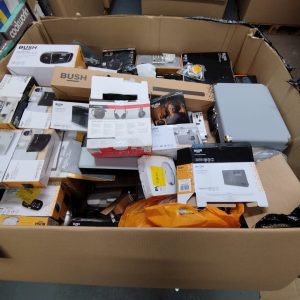
Buy Amazon Return Pallets (100+ Mixed Items From £260)
£260.00
Current Price: From £260 per pallet
Status: In Stock – High Demand
Seller: Verified Amazon Return Liquidator
Source: Amazon Customer Returns & Overstock Inventory
Condition: Mixed – Untested Returns, Shelf Pulls & Overstock
Items per Pallet: 100+ Assorted Items
Estimated Retail Value: Up to £2,800+
Packaging: Shrink Wrapped & Manifested
Distribution Agreement Required: No
Shipping Area: Fast Freight Delivery Across USA & Worldwide
Amazon return pallets are one of the most profitable liquidation options for serious resellers. Each pallet includes a diverse mix of high-demand products sourced directly from Amazon customer returns and excess inventory. Ideal for eBay sellers, marketplace resellers, bin store operators, and retail arbitrage businesses looking for strong margins.
What’s Inside Amazon Return Pallets
Inventory varies by load but typically includes:
• Consumer electronics
• Home and kitchen appliances
• Apparel and footwear
• Toys and baby essentials
• Tools and hardware
• Health and beauty products
• Pet supplies
• Seasonal and general merchandise
Example Manifest Breakdown – 120 Items Total
Electronics (35 Items)
Bluetooth speakers: 10 units
Headphones and earbuds: 15 units
Phone accessories: 10 units
Home & Kitchen (30 Items)
Small kitchen appliances: 8 units
Cookware sets: 7 units
Storage organizers: 15 units
Clothing & Apparel (20 Items)
Men’s clothing: 8 units
Women’s clothing: 10 units
Kids clothing: 2 units
Toys & Baby (15 Items)
Educational toys: 6 units
Board games: 4 units
Baby accessories: 5 units
Tools & Hardware (10 Items)
Hand tools: 6 units
Power tool accessories: 4 units
Health & Beauty (10 Items)
Skincare bundles: 5 units
Hair care products: 5 units
Most pallets contain approximately 60% to 70% brand new or like-new items, with the remaining inventory consisting of customer returns that may require testing or repackaging before resale.
These pallets are built for resale profit. Many buyers generate strong returns by testing, sorting, bundling, and selling items individually across multiple platforms.
Amazon Return Pallets: Mystery Boxes And Pricing Guide
The world of secondary commerce is often driven by the massive volume of goods sent back by online shoppers. For many entrepreneurs, these items represent a significant business opportunity. Understanding the logistics of bulk inventory is the first step toward building a profitable resale operation. This guide will walk you through the process of sourcing, valuing, and selling these goods.
Key Takeaways
-
Research the difference between manifested and unmanifested loads before buying.
-
Always calculate the total landed cost, including heavy freight fees.
-
Focus on high-demand categories like small appliances and home goods.
-
Verify the reputation of liquidation platforms through third-party reviews.
-
Budget for a percentage of unsalvageable or broken items in every load.
-
Use local pickup options to save on expensive shipping charges.
-
Document every delivery with photos to protect against transit damage.
-
Start with smaller lots to learn the grading standards of different sellers.
Amazon Return Pallets
Large volumes of inventory are generated every day when consumers send items back to the original retailer. These goods are consolidated into amazon return pallets after they are processed at centralized return centers. When a customer sends back a vacuum cleaner or a set of headphones, the item is often no longer sold as new on the main website.
The movement of these goods into the secondary market is a logistical necessity. Amazon warehouses have limited space, so inventory that cannot be quickly resold is moved to liquidation partners. These partners then bundle the items onto wooden skids for sale to the public. This process ensures that the warehouse remains efficient and the retailer recovers some of the initial cost.
Bulk sales are preferred over individual listings because of the high cost of labor. It is much faster to wrap a hundred items on a pallet than it is to list them one by one. By selling in bulk, the retailer passes the work of sorting and testing to the buyer. This is why amazon return pallets are sold at a deep discount compared to their original retail value.
How To Buy Amazon Return Pallets?
Yes, the buying process is straightforward but requires careful registration and research. Most buyers begin by creating an account on a reputable liquidation website. You will often need to provide a resale certificate to avoid paying sales tax on your purchase. Once the account is verified, you can browse available inventory and place bids or choose a “buy it now” option.
Fixed-price listings allow you to buy inventory immediately at a set cost. This is beneficial for those who want to avoid the stress of a ticking clock. Auctions, however, allow the market to determine the price. In an auction, the highest bidder wins the lot after the time expires. It is important to set a maximum budget before the bidding starts to avoid overpaying.
Readers are encouraged to explore verified liquidation partners linked on this site. Using trusted sources is the best way to avoid scammers who misrepresent their inventory. Streamlining your sourcing through professional platforms ensures that you receive the documentation needed for your business records.
Table 1: Comparison Of Purchase Methods
| Feature | Fixed-Price Listings | Online Auctions |
| Pricing | Set by the seller | Determined by bidders |
| Speed | Immediate checkout | Requires waiting for end time |
| Competition | None for that specific lot | High among multiple buyers |
| Risk | Lower price volatility | Possible overbidding |
| Predictability | High budget control | Variable profit margins |
Amazon Return Pallets Near Me
Local liquidation warehouses operate as regional hubs for bulk inventory. These facilities receive truckloads of goods from major retailers and break them down for local buyers. By visiting a warehouse in your area, you can often see the physical condition of the pallets before you pay. This transparency is a major advantage for new resellers who are nervous about mystery loads.
Shipping costs are a major expense in the liquidation industry. Sourcing nearby allows you to significantly reduce or even eliminate these fees. If you have a truck or a trailer, you can pick up the inventory yourself. This keeps your “landed cost” low, which means you have more room for profit when you finally sell the individual items.
When choosing between pickup and freight, you must consider the equipment available. Freight delivery often requires a loading dock or a forklift. If you are a residential buyer, you will need to request a liftgate service. This service involves a special truck that can lower the pallet to the ground, but it usually comes with an extra fee.
Amazon Return Pallets For Sale
Listings for these goods are usually structured in one of two ways. Manifested pallets come with a detailed list of every item included, along with the estimated retail value. Mystery formats, on the other hand, offer very little information. While mystery loads are riskier, they are often sold at a much lower price point, which can lead to higher returns if you find valuable items inside.
The condition of the items is categorized into three main groups. “New” or “Shelf Pulls” are items that were never used but were removed from store shelves. “Used” items are customer returns that may show signs of wear or missing packaging. “Salvage” items are typically broken or non-functional and are best for those who can repair electronics or harvest parts.
Typical pallet sizes are standard 48×40 inch wooden skids. The height of the load can vary, but most are stacked between four and six feet high. Lot quantities can range from a single pallet to a full truckload containing 26 individual units. Smaller lots are recommended for those working out of a garage or a small storage unit.
Amazon Auction Pallets
Bidding systems for these goods operate similarly to other online marketplaces. You must place a bid that is higher than the current offer to become the leading buyer. Most platforms use “proxy bidding,” where the system automatically increases your bid up to your maximum limit. This ensures you do not have to watch the screen every second.
Pricing volatility is a common risk in the auction world. If multiple people want the same category of goods, the price can skyrocket quickly. Competition is especially high for electronics and small kitchen appliances. It is easy to get caught up in the excitement and pay more than the inventory is actually worth.
When you compare auctions to fixed-price purchases, the main difference is the potential for a “steal.” Auctions can sometimes end at a very low price if other buyers are not paying attention. Fixed-price deals offer stability, but auctions offer the chance for extreme ROI if you are patient and disciplined with your bidding strategy.
How Much Do Amazon Return Pallets Cost?
Pricing is determined by several factors including the category of goods and the condition of the items. A pallet of high-end electronics will naturally cost more than a pallet of clothing or home decor. The detail of the manifest also plays a role. Buyers are willing to pay a premium for a list that tells them exactly what they are getting.
Low advertised prices can be very misleading for new buyers. A pallet might be listed for 300 dollars, but the shipping could cost another 400 dollars. There are also buyer premiums, which are fees charged by the auction site that typically range from 10 to 15 percent. You must add all these costs together to find your true investment.
Realistic expectations for new buyers should range from 500 to 1,500 dollars per pallet including shipping. It is rare to find high-quality goods for less than this amount. Using the site’s pallet profitability calculator is a great way to estimate your margins. It helps you factor in all the hidden fees before you click the bid button.
Table 2: Estimated Cost Breakdown By Category
| Category | Average Pallet Price | Typical Shipping Cost | Total Investment |
| General Merchandise | 400 – 700 dollars | 250 – 450 dollars | 650 – 1,150 dollars |
| Small Appliances | 800 – 1,200 dollars | 250 – 450 dollars | 1,050 – 1,650 dollars |
| High-End Electronics | 1,500 – 3,000 dollars | 250 – 450 dollars | 1,750 – 3,450 dollars |
| Clothing & Apparel | 300 – 600 dollars | 200 – 400 dollars | 500 – 1,000 dollars |
| Home Improvement | 500 – 900 dollars | 300 – 500 dollars | 800 – 1,400 dollars |
What Is The Risk Of Buying Amazon Pallets?
Damaged goods are the most common risk in this business. Because these are customer returns, items may have been used, broken, or even swapped for older models. You must expect that a portion of every pallet will be unsellable. Missing pieces, such as remote controls or power cables, are also frequent issues that can lower your resale value.
The variability in resale value can be frustrating. You might buy a load that looks great on paper but contains items that are currently out of fashion or oversupplied. Market prices on platforms like eBay and Amazon fluctuate daily. This means the profit you calculated on Monday might be smaller by the time your pallet arrives on Friday.
There is a significant learning curve for first-time buyers. Managing space, testing products, and dealing with difficult customers are all skills that take time to master. Many people quit after their first pallet because they did not realize how much physical labor is involved. It is a business of processing and patience, not just easy money.
Is Amazon Liquidation Pallets A Real Thing?
Yes, the liquidation of returned goods is a legitimate and massive industry. Amazon partners with specific liquidation companies to clear out their overstock and returned inventory. This is a standard business practice used by almost all major retailers. It helps them recoup capital and keeps their supply chain moving smoothly.
Confusion is often created by branding misuse online. Some websites use the Amazon logo without permission to sell fake “mystery boxes” to unsuspecting consumers. These are often scams that ship worthless trinkets instead of real bulk inventory. It is vital to distinguish between a social media ad and a professional B2B liquidation platform.
Verifying authentic sellers is done by checking for business credentials and physical warehouse locations. Legitimate sellers will have a customer service department and clear terms of service. You should also look for reviews on independent sites to see the experiences of other professional resellers. Genuine partners will always provide a clear invoice and tracking information for your shipment.
Buying Amazon Return Pallets From Direct Liquidation
Direct Liquidation is a well-known authorized partner for several large retailers. They provide a platform where buyers can access inventory directly from the source. By cutting out middleman liquidators, you can often find better prices and more consistent quality. They handle the logistics and payment processing to make the experience seamless for the buyer.
The account registration process requires basic business information. Once you are signed up, the bidding mechanics are very intuitive. You can set alerts for specific categories so you never miss a new listing. The platform also offers “buy it now” options for those who prefer to skip the auction process.
Pallet grading standards are used to give buyers an idea of what to expect. They use specific terms like “Grade A” for like-new items and “Grade C” for items with visible damage. Understanding these grades is essential for making informed bids. Always read the grading definitions on the platform before you commit to a purchase.
Table 3: Pallet Grading Standards
| Grade | Description | Expected Condition |
| Grade A | Like New | Retail-ready, original packaging. |
| Grade B | Lightly Used | Minor scratches, packaging may be opened. |
| Grade C | Visible Wear | Functional but shows heavy use or marks. |
| Unchecked | Raw Returns | Not inspected, high risk and high reward. |
| Salvage | Broken / Parts | Does not work, used for repair or recycling. |
How Does Ordering Work?
The order lifecycle begins as soon as you win an auction or complete a checkout. You will receive an automated notification with an invoice. It is important to pay quickly, as most platforms have strict payment windows of 24 to 48 hours. If you fail to pay, your account may be suspended or you may be charged a penalty fee.
Payment timelines are usually followed by an invoicing period where shipping is calculated. You will have the option to use the platform’s shipping partners or arrange your own transport. Using the site’s partners is usually easier because they already have the warehouse dimensions and pickup schedules.
Shipping coordination requires you to be ready for a large delivery. The carrier will provide a tracking number, and you should ensure someone is available to sign for the pallet. You must have the proper space cleared in your garage or warehouse before the truck arrives. Documentation, such as the bill of lading, should be kept for your tax records.
Inspecting And Grading Amazon Return Pallets
Post-delivery inspection is a critical step in the resale process. You should open the pallet as soon as it arrives and check the items against the manifest. This is the time to identify any major discrepancies. Use a camera to record the unboxing process, as this provides evidence if you need to file a claim for missing items.
Verifying the condition of the items is the next task. Each item should be tested to see if it powers on and functions correctly. You should also check for all included accessories. Once an item is tested, you can assign it your own grade based on the platform where you plan to sell it.
Steps to document transit damage should be taken immediately. If the shrink wrap is torn or the boxes are crushed when the truck arrives, note this on the driver’s delivery receipt. Take clear photos of the damage before you move the pallet. This documentation is required by insurance companies to process claims for goods damaged during shipping.
How To Sell Amazon Return Pallets?
Breaking down pallets into individual listings is where the real work begins. You must clean the items, take high-quality photos, and write accurate descriptions. The goal is to make the item look as appealing as possible while being honest about its “returned” status. This transparency builds trust with your buyers and reduces the chance of future returns.
Bulk resale is an option for those who want to move inventory quickly with less work. You can sell smaller “lots” of related items to other resellers. However, itemized resale usually brings in the most money. By selling each piece to the end consumer, you capture the full retail spread rather than a wholesale margin.
Pricing psychology plays a big role in moving returned goods. Customers expect a discount when they buy something that isn’t brand new. Pricing your items at 20 to 30 percent below the current retail price is a common strategy. This creates a sense of value that encourages shoppers to choose your listing over a “new” one from a major store.
Where To Sell Inventory From Amazon Return Pallets?
Online marketplaces like eBay and Mercari are the most popular choices for resellers. These sites have a huge audience of people specifically looking for deals on used or open-box items. Amazon itself has a “Renewed” program, but it has very strict requirements for sellers. Poshmark is excellent if your pallets contain clothing or high-end fashion accessories.
Local sales channels like Facebook Marketplace and Craigslist are great for heavy or bulky items. Selling locally means you don’t have to deal with shipping, which saves you money and time. Physical venues like flea markets or “bin stores” are also effective. Bin stores are a popular new trend where items are placed in large troughs and sold at a declining daily price.
Audience targeting should be based on the category of the product. Electronics appeal to tech-savvy shoppers on specialized forums, while home goods do well on visual platforms. Scalability depends on your chosen channel. Online sales are easier to scale with software, while local sales are limited by your physical location and the size of your community.
Table 4: Resale Channel Comparison
| Channel | Best For | Pros | Cons |
| eBay | Electronics / Small Items | Massive global audience | High fees and shipping labor |
| Furniture / Large Tools | No shipping, cash payments | Meeting strangers, flaky buyers | |
| Flea Markets | Low-Value / Misc Goods | Immediate cash, high volume | Time-consuming, weather-dependent |
| Poshmark | Fashion / Beauty | Simplified shipping | Higher commission fees |
| Own Website | Branded / Niche Goods | No third-party fees | Hard to drive traffic |
Pros And Cons Of Buying Amazon Return Pallets
The main advantage of this business model is the low acquisition cost. You are buying inventory for a small fraction of its retail value, which creates high potential margins. The variety of goods is also a benefit. One pallet can contain a mix of items that allows you to test different markets without a huge investment in any single product.
However, the drawbacks must be balanced against these perks. Inconsistency is a major hurdle; one pallet might be a gold mine, while the next is a total loss. The processing labor is also intense. You will spend hours cleaning, testing, and listing items. If you do not enjoy this type of work, the business can quickly become a burden.
Deciding if these loads match your business goals depends on your risk tolerance. If you have extra space and enjoy the “treasure hunt” aspect of the business, it can be very rewarding. For those who want a predictable, hands-off income, this may not be the right path. It is a true “sweat equity” business that requires active management to succeed.
Types Of Amazon Return Pallets
Category-specific loads allow you to specialize in a niche. Electronics pallets are highly sought after but require technical knowledge to test and repair. Appliance pallets, including air fryers and coffee makers, have high resale velocity. Understanding which categories move the fastest in your area will help you choose the right inventory.
Category impacts resale velocity significantly. Items that people need every day, like kitchen tools or baby gear, tend to sell much faster than niche collectibles. Seasonal trends also play a role. Toy pallets are incredibly popular in the fall, while outdoor and garden pallets peak in the spring and early summer.
Demand trends are influenced by the economy. During a recession, people often turn to secondary markets to find the things they need at lower prices. This can actually increase the demand for your inventory. Staying informed about consumer behavior through resources like the U.S. Small Business Administration can help you adjust your sourcing strategy over time.
Table 5: Resale Velocity By Category
| Product Category | Resale Speed | Profit Margin | Difficulty |
| Consumer Electronics | Very Fast | High | High (Testing) |
| Home & Kitchen | Fast | Medium | Low |
| Toys & Games | Moderate | Medium | Low |
| Tools / Hardware | Moderate | High | Medium |
| Clothing | Slow | High | High (Listing) |
Frequently Asked Questions About Amazon Return Pallets
What Are Amazon Return Pallets And How Do They Work?
These are bulk collections of items that were returned by customers or never sold. They are sold through liquidation channels to clear warehouse space. The process starts at a return center and ends when a third-party buyer purchases the skid for resale. It is a way for retailers to recover costs and for small businesses to find affordable stock.
How Much Do Amazon Return Pallets Cost For New Buyers?
New buyers should expect to spend between 500 and 1,500 dollars for their first pallet. This estimate includes the cost of the goods and the shipping fees. While some smaller boxes are available for less, full pallets usually require a thousand-dollar investment to get quality inventory. Always account for the 10 to 15 percent auction fee when setting your budget.
Related products
-
GENERAL MERCHANDISE
Buy Larry’s Liquidation Pallets For Sale (Truckloads From £1,200)
£1,200.00 Add to cart