
Pallet Liquidation In Hawaii: Costco Whatnot Sellers Wholesale And Sourcing
Although buying liquidation pallets in Hawaii can be profitable, it is challenging due to high shipping costs and limited local inventory. This guide explains how to source, evaluate and purchase pallets from Amazon, Costco, Home Depot and other suppliers, taking into account Hawaii’s unique logistics. Find out where to buy, how much to pay, and how to minimise risk to maximise your resale profits.
Table of Contents
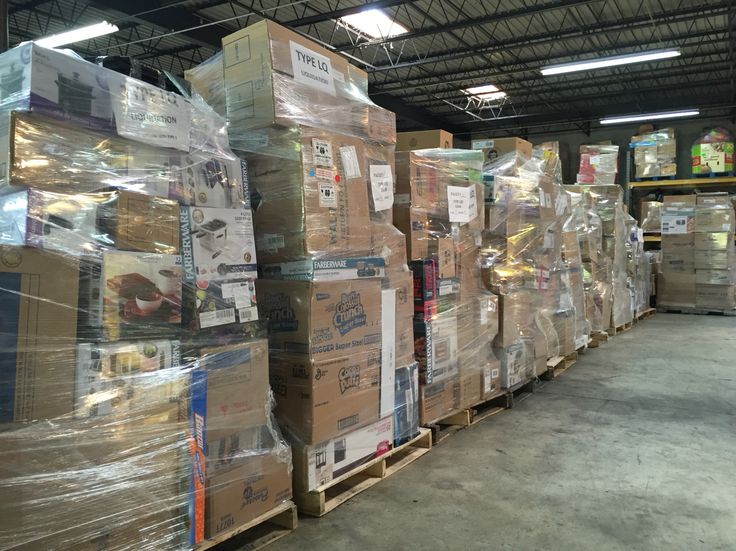
Request A Retail Or Bulk Quote In Hawaii
Need wholesale pallets in Hawaii? Request a free retail or bulk quote today. We’ll provide competitive pricing, available inventory, and shipping options within 24 hours.
Fast Shipping And Logistics
- Orders typically ship within 2–4 business days.
- FTL and LTL shipping available across the U.S. and selected export destinations.
- Pallets are securely wrapped for safe delivery, with manifests available upon request.
- International shipping quotes are available for port or direct freight delivery.
-
WHOLESALE LIQUIDATION PALLETS
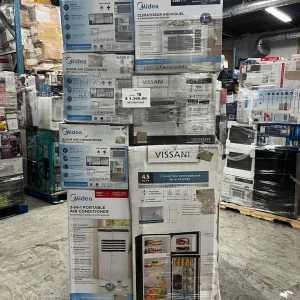
Buy Air Conditioner Pallets – Starting at $1,450 (50–55 Units)
$1,750.00Original price was: $1,750.00.$1,450.00Current price is: $1,450.00. Add to cart -
Apple Pallets
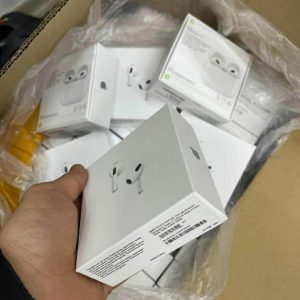
Buy Airpods Liquidation – Starting at $1,850 (100–110 Units)
Rated 4.50 out of 5$2,000.00Original price was: $2,000.00.$1,850.00Current price is: $1,850.00. Add to cart

Key Takeaways
- Liquidation pallets in Hawaii cost 15-30% more than mainland pricing when shipping is included; a $1,200 pallet often costs $1,600-$1,800 delivered.
- Lightweight categories (clothing, books, small electronics) generate better margins for Hawaii resellers than heavy items (appliances, tools) where shipping consumes 25-50% of profit.
- BULQ and Direct Liquidation are the most reliable suppliers for Hawaii buyers, offering transparent shipping quotes, detailed manifests, and responsive support.
- Realistic profit margins for Hawaii resellers range from 20-40% after accounting for shipping, platform fees, defective items, and resale costs.
- Costco doesn’t sell liquidation pallets through any official program; Home Depot and Lowes pallets are available only through third-party liquidation platforms.
- Start with one mid-grade condition pallet ($800-$1,500 total cost) to test your supplier, costs, and resale capability before scaling up.
Pallet Liquidation In Hawaii
In Hawaii, pallet liquidation involves purchasing wholesale pallets of returned, overstocked or surplus merchandise from retailers and liquidation companies, and then selling the items individually or in bulk via e-commerce platforms such as Whatnot, eBay and Amazon, or through local retail channels. While the process is similar nationwide, Hawaii’s geographic isolation creates a unique cost structure. Every pallet from the mainland requires expensive freight to reach the islands, so selecting the right suppliers and product categories is crucial for profitability.
Here’s how the market operates: retailers generate excess inventory through returns, overstocking and seasonal clearance. Rather than heavily discounting or destroying unsold merchandise, they sell it in bulk to liquidation companies. These companies then inspect, sort and grade the items by condition (Grade A, B or C), bundle them into pallets and resell them through platforms such as BULQ, Direct Liquidation and UpLiquidation. You purchase the pallet, inspect the contents upon arrival and then resell the items through your chosen channel.
For resellers in Hawaii, the critical difference is that shipping costs — typically $300–$700 per pallet, depending on weight — directly impact profitability. A $1,000 pallet becomes a $1,400–$1,500 investment before you even open it. It is therefore essential to understand Hawaii-specific sourcing strategies, shipping economics and which product categories can sustain healthy margins after freight expenses.
Is Buying A Liquidation Pallet Worth It In Pallet Liquidation In Hawaii?
Yes, but profitability depends on your product category, the suppliers you select, and how well you manage costs. The return on investment for resellers in Hawaii typically ranges from 20-40% after accounting for the cost of pallets, shipping, and platform fees (Amazon, eBay, etc. take 8-15%). This is a realistic target, and achievable if you select the right product categories and suppliers.
How Profit Margins Break Down by Category
| Product Category | Typical Margin | Shipping Impact | Best Resale Channel | Success Factors |
|---|---|---|---|---|
| Clothing & Apparel | 25-35% | Low (lightweight) | Whatnot, eBay bulk, local consignment | Volume selling, trend awareness, bundle deals |
| Books & Media | 20-30% | Low (lightweight) | Amazon, eBay, local libraries | Niche selection, condition matching, condition grading accuracy |
| Small Electronics | 30-45% | Medium (moderate weight) | Amazon FBA, eBay, specialty resellers | Testing functionality, bundle kits, missing part documentation |
| Tools & Hardware | 28-40% | High (heavy) | Local contractors, Facebook Marketplace | Niche knowledge, condition assessment, direct sales |
| Home Goods | 15-25% | Very High (heavy) | Local retail, consignment | Bulk sales, seasonal timing, local demand |
| Appliances | 10-20% | Very High (extreme weight) | Local only, partnerships | Logistics partnerships, specialized buyers, warranty clarity |
Why category matters: A clothing pallet weighing 800 lbs might cost $400 to ship. A tool pallet weighing 1,500 lbs might cost $700. When clothing resells at 30% margin and tools at 35%, the lighter pallet often delivers better profit dollars because shipping consumed less of your revenue.
Who succeeds most with liquidation sourcing:
- Business owners with existing inventory infrastructure (space, labor, systems)
- E-commerce sellers with established traffic (Amazon, eBay, Etsy storefronts with reputation)
- Whatnot live sellers with engaged audiences (profitability depends on viewer engagement and auction competitiveness)
- Sellers focusing on one or two categories they understand deeply
- Resellers with access to local sales channels (consignment shops, Facebook groups, local retail partnerships)
Who struggles: Beginners without resale infrastructure, sellers hoping to source everything profitably, buyers who don’t calculate full costs upfront, and those selecting heavy categories without understanding shipping’s impact.
What Are The Risks Of Buying Return Pallets In Pallet Liquidation In Hawaii?
Liquidation pallets carry inherent risks. Understanding these risks allows you to mitigate your exposure before committing capital.
Risk 1: Damaged and Defective Goods
Not all items in a return pallet are resalable. Liquidation companies assign condition grades — Grade A (like-new), Grade B (good), Grade C (fair/cosmetic damage) and Grade D (poor/non-functional) — but standards vary significantly between suppliers. For example, a ‘Grade B’ pallet from one supplier might contain more damage than a ‘Grade C’ pallet from another. Budget for 5–20% of items to be unsaleable or to require heavy discounting, depending on the condition grade. Grade A pallets have a 5-10% defect rate, whereas Grade C pallets can have a defect rate of 20-30%.
Risk 2: Incomplete or Inaccurate Manifests
A manifest is the itemized list of supposed pallet contents. Some suppliers provide detailed SKU-level documentation (item by item); others provide category summaries (“15 tools, 8 home goods”). Manifests can be inaccurate: items listed might be missing, or items included weren’t documented. This creates uncertainty about your actual inventory value and complicates ROI calculations. Always compare manifests from multiple suppliers for the same pallet category if possible.
Risk 3: Shipping Costs Exceeding Expectations
This is the hidden killer for Hawaii resellers. Suppliers’ weight estimates aren’t always accurate. For example, a ‘1,000 lb pallet’ may actually weigh 1,200 lbs, which would push shipping costs up by an unexpected $100–$200. Always request a firm shipping quote, not an estimate, before making a purchase. If the shipping cost exceeds 25% of the pallet price, the risk/reward ratio deteriorates significantly.
Risk 4: Long Delivery Times and Capital Lock-Up
Pallets shipped from the mainland take 7–14 days to arrive in Hawaii. During peak seasons, such as the holiday season and the back-to-school period, this timeline can extend to 14–21 days. This results in slower inventory turnover and ties up capital for longer than mainland resellers experience. For Whatnot sellers who depend on rapid inventory turnover to generate content and revenue, these delays are particularly costly.
Risk 5: Limited Recourse and Return Policies
Once a pallet has been delivered, most liquidation companies only allow a limited number of returns. You usually have 24–48 hours to report any discrepancies before the returns period ends. Unlike retail purchases, which have clear return policies, liquidation sales are usually final. Policies vary: some suppliers offer refunds of 10–20% for significant discrepancies, while others refuse refunds entirely.
How Can I Reduce These Risks?
1. Request detailed manifests with SKU-level documentation. Category summaries (“10 electronics”) tell you nothing. Detailed manifests (“3x Samsung 32″ 4K TV, model UN32JU6500, Grade B; 7x miscellaneous small electronics”) let you assess true value. Compare manifests from multiple suppliers before committing.
2. Always get firm shipping quotes in writing before purchasing. Estimated shipping is worthless. Request a quote for your specific address, and confirm it’s binding. Many suppliers update estimates at checkout; if the final price exceeds your budget, you can back out.
3. Start with mid-grade condition pallets ($800-$1,500 total). This tests your supplier, your sorting and listing process, and your resale capability without risking significant capital. First purchases are learning investments.
4. Check independent reviews on Trustpilot, Google Reviews, and Reddit’s r/Liquidation community. Look for patterns: consistent praise for manifest accuracy, complaints about shipping delays, feedback specific to Hawaii shipping. One bad review doesn’t mean much; patterns do.
5. Join Hawaii reseller Facebook groups and Whatnot seller communities. Local resellers share supplier experiences and current shipping cost data. This intelligence cuts trial-and-error costs dramatically.
6. Inspect and document upon delivery. Take photos and video of pallet condition before opening. Compare contents to the manifest within 24 hours. Report discrepancies immediately while the carrier is still accountable. Keep all documentation for dispute resolution.
Pre-Purchase Verification Checklist
Before committing funds, verify these items:
- Manifest detail level: Does the manifest list items by SKU, or just by category? (SKU-level is required for confidence)
- Condition grade definition: Have you asked the supplier what “Grade B” specifically means for this pallet? (Don’t assume consistency across suppliers)
- Pallet weight and dimensions: Have you confirmed actual weight to estimate shipping accurately?
- Shipping quote: Have you received a firm, written shipping quote for your Hawaii address (not an estimate)?
- Return policy: What’s your window to report discrepancies? Does the supplier offer refunds or replacements for manifest errors?
- Supplier reputation: Have you checked Trustpilot, Google, or Reddit for recent feedback on manifest accuracy and Hawaii shipping reliability?
- Product category suitability: Does this pallet align with your resale channel and expertise level?
How Can I Buy A Pallet Of Returns In Pallet Liquidation In Hawaii?
The Complete Buying Process
Step 1: Choose Your Sourcing Channel
Three main options exist: liquidation marketplaces (online platforms with buyer protections), auction sites (bidding-based, variable terms), and direct suppliers (negotiated deals, no platform protections).
Liquidation Marketplaces (BULQ, UpLiquidation, Direct Liquidation) function like Amazon for wholesale buyers. You browse pallets, read manifests, compare prices, check shipping costs, and purchase directly. Platforms handle logistics coordination and offer basic buyer protections (dispute resolution within limited windows). These are ideal for Hawaii buyers because shipping terms are pre-negotiated, and platform support exists if problems arise.
Auction Sites (B-Stock, QuickLotz) require real-time bidding. You compete against other buyers, often securing lower prices, but shipping terms vary per lot and information is sometimes sparse upfront. Auctions can deliver bargains for experienced buyers but create uncertainty for newcomers.
Direct Supplier Relationships involve contacting liquidation companies, retailers, or brokers directly. You negotiate pricing and terms directly, potentially securing better deals for large orders, but you lose platform protections and dispute resolution. Only viable for experienced resellers with established relationships.
Recommendation for Hawaii buyers: Start with marketplaces (BULQ, Direct Liquidation) because they eliminate logistics guesswork and provide consistent shipping quotes.
Step 2: Evaluate Pallet Details Before Purchasing
Before clicking “Buy,” verify:
- Manifest clarity: Are items listed individually by SKU, or grouped by category? Detailed = better decision-making.
- Condition grade definition: Request the supplier’s specific definition for this grade (e.g., “Grade B: Items with cosmetic damage, fully functional, may lack original packaging”).
- Dimensions and weight: Confirm pallet size (standard is 40″x48″) and weight to estimate shipping accuracy.
- Shipping inclusion: Does the platform price include shipping to Hawaii, or is it added separately? Know the total landed cost before proceeding.
- Return/dispute window: How long can you report discrepancies? 24 hours? 48 hours? This matters for problem resolution.
Step 3: Request Final Shipping Quote
Enter your Hawaii address and confirm shipping cost. Most platforms update estimates in real-time; some provide binding quotes only after checkout. If the final shipping cost exceeds your budget, walk away.
Step 4: Purchase and Arrange Delivery
Pay via credit card, wire, or financing options (some suppliers offer payment plans). Confirm your delivery location (home address, business, logistics warehouse). You’ll receive tracking information. Transit time is typically 7-14 days.
Step 5: Inspect Upon Arrival
Pallet arrives. Document condition with photos and video before opening. Compare contents to manifest. If the pallet visibly matches the manifest and condition, accept delivery. If discrepancies exist, report within 24 hours to the supplier with photo evidence.
Where Is The Best Place To Buy Return Pallets In Pallet Liquidation In Hawaii?
Top Suppliers for Hawaii Resellers
| Supplier | Best For | Manifest Quality | Shipping Transparency | Strengths | Caution |
|---|---|---|---|---|---|
| BULQ | First-time buyers, variety seekers | Excellent (SKU-level) | Clear upfront quotes | Large inventory, responsive support, Hawaii-proven | Higher prices than some competitors |
| Direct Liquidation | Data-driven buyers, predictable costs | Very detailed (SKU + condition) | Transparent calculator on site | Accurate manifests, stable pricing, category-specific filtering | Smaller selection than BULQ |
| UpLiquidation | Budget buyers, volume resellers | Good (category + item counts) | Estimated, refined at checkout | Competitive pricing, established platform, good variety | Manifests less granular than Direct Liquidation |
| PS LIQUIDATION | Experienced resellers, niche categories | Detailed | Transparent | Premium quality inventory, specialty items, responsive | Higher prices; best for resellers with experience |
| B-Stock | Deal hunters, auction enthusiasts | Variable (lots vary) | Variable by lot | Auction-based pricing (potential discounts), large volume | Shipping terms unclear upfront, less transparent |
For Hawaii specifically: Bulq and Direct Liquidation dominate because they have optimised their services for shipping to the islands, provide firm quotes upfront and respond quickly to Hawaii-specific enquiries.
How to Evaluate a New Supplier:
- Test with a small order ($500-$800 pallet + shipping) before committing to larger purchases
- Check recent reviews on Trustpilot and Google specifically mentioning Hawaii shipping and manifest accuracy
- Email a pre-purchase question to gauge responsiveness (fast, detailed replies = good sign)
- Verify company stability (how long in business, physical address, verified phone number)
- Ask for references from other Hawaii buyers if possible
What Is The Best Site To Buy Amazon Pallets For Pallet Liquidation In Hawaii?
Amazon does not operate a direct pallet sales programme. Instead, authorised liquidation partners resell Amazon returns. Primary sources:
Both BULQ and Direct Liquidation offer dedicated Amazon inventory sourced from third-party seller returns and Amazon overstock. These pallets are popular because Amazon’s tracking system ensures that items are well documented, and the defect rate is often 5–15% lower than for mixed-retailer pallets. Prices are higher ($1,200–$2,500 for Grade A/B) to reflect the higher quality.
UpLiquidation carries Amazon pallets but mixes them with other retailers. Pricing is sometimes lower, but manifests are less detailed.
What to expect when buying Amazon pallets:
- Higher entry cost: $1,200-$2,500 starting price reflects strong demand
- Better condition: Amazon enforces strict return windows, so items tend to be in better shape
- Detailed documentation: Amazon’s systems mean manifests are usually accurate
- Higher shipping costs: Amazon pallets skew toward heavier, higher-value items
- Faster resale on Amazon FBA: If reselling via Amazon, these pallets are optimized for that channel
Amazon pallet pricing example (hypothetical but realistic):
Grade B Amazon electronics pallet: $1,600 (pallet cost) + $450 (shipping) = $2,050 investment. If the items are resold on Amazon for $3,200 after fees, the gross profit is $1,150 (a 56% margin before accounting for defects and returns). After accounting for a 10% defect rate and Amazon fees, the net profit is approximately $800 (a 39% margin).
Where Do Whatnot Sellers Get Pallets For Pallet Liquidation In Hawaii?
Whatnot sellers (live auctioneers selling liquidation items in real-time) use multiple sourcing channels:
1. Liquidation Marketplaces — BULQ and UpLiquidation are primary sources. Whatnot sellers purchase mid-to-high-grade pallets, unbox them on stream, and sell items individually to viewers. This channel offers consistency and ease of comparison.
2. Private Facebook Wholesaler Groups — Closed groups connecting brokers and resellers. Members post available pallets, negotiate directly, and arrange sales. Groups often offer better rates than public platforms but require vetting and relationship-building.
3. TikTok Liquidation Brokers — Emerging sourcing method where liquidation brokers advertise pallets on TikTok, DM buyers, and facilitate sales. Quality and reputation vary wildly; verify credentials carefully before committing.
4. Direct Retailer Relationships — Established Whatnot sellers with large followings build direct relationships with liquidation companies or store managers, securing exclusive pallets at negotiated rates. This requires existing platform credibility and audience size (typically 500+ regular viewers).
5. Local Liquidation Auctions — Hawaii has occasional in-person liquidation auctions (Bid4Assets, local auctioneers) where buyers can inspect pallets before purchasing and avoid shipping costs entirely. Requires travel and immediate payment.
Whatnot Seller Preferences:
Whatnot sellers prioritize inventory that looks diverse and entertaining on camera. This means they favor mid-grade condition pallets (Grade B or C) from mixed-category suppliers. Variety drives viewer engagement and auction activity. Heavy electronics or luxury items are especially popular because they generate viewer excitement and competitive bidding.
Does Costco Sell Liquidation Pallets In Pallet Liquidation In Hawaii?
No. As of 2024, Costco does not offer a direct liquidation pallet program for individual resellers. Costco’s return and overstock inventory is managed internally: items are restocked, donated to nonprofits, or liquidated through Costco.com auctions (member-only, item-by-item sales, not bulk pallets).
What Costco occasionally offers:
- In-warehouse clearance sales when closing locations or clearing seasonal overstock. These are advertised to members and operate as retail markdowns on individual items, not bulk pallet sales.
- Costco.com liquidation auctions for members (posted sporadically; item-by-item, not pallets).
For Costco-branded products at liquidation pricing: Third-party suppliers sometimes acquire Costco return inventory and resell through BULQ or Direct Liquidation. However, this is indirect and availability is unpredictable.
Action: For current Costco options, contact your local warehouse’s business development office or the Costco executive customer relations line. Policies change, and some regions or business structures may have exceptions.
Does Home Depot Sell Return Pallets In Pallet Liquidation In Hawaii?
Yes, but indirectly. Home Depot sells return pallets and overstock through authorized liquidation partners, not directly to consumers.
Primary channels for Hawaii buyers:
1. Liquidation Partner Platforms — Home Depot contracts with BULQ and Direct Liquidation to resell pallets publicly. This is your best option for Hawaii access. Pallets contain tools, hardware, building materials, seasonal items, and damaged goods. Manifests are detailed; shipping is straightforward.
2. Local Auction Sites — Rare in Hawaii. Some Home Depot distribution centers use local auctioneers (Bid4Assets) to clear inventory, but auctions are sporadic and low-volume.
3. Direct Business Partnerships — Home Depot may sell pallets directly to established contractors or businesses with existing relationships. This requires existing business accounts and typically involves negotiated per-unit pricing rather than pallet purchases.
Home Depot Pallet Contents and Profitability
| Category | Contents | Weight Impact | Margin Reality | Best Channel |
|---|---|---|---|---|
| Tools & Power Equipment | Mixed hand/power tools, some incomplete | Heavy (800-1,200 lbs) | 25-35% | Local contractors, Facebook Marketplace, eBay |
| Building Materials | Lumber, drywall, fasteners, returns | Extremely heavy (1,500+ lbs) | 10-20% | Local only; logistics partnerships essential |
| Seasonal Items | Garden, holiday, outdoor goods | Medium (600-900 lbs) | 20-30% | Local retail, consignment, Facebook groups |
| Damaged Goods | Mixed categories with cosmetic damage | Variable | 15-25% | Local liquidation, bulk online resellers |
Critical consideration: Home Depot pallets are heavy. A standard pallet might weigh 1,000-1,500 lbs, pushing shipping costs to $600-$900. Profit margins must absorb these costs. Tools and power equipment have better margins; lumber and building materials have thin margins and aren’t worth shipping to Hawaii unless you have local demand.
How Can I Buy Liquidation Pallets Directly From Lowes In Pallet Liquidation In Hawaii?
Lowes does not sell liquidation pallets directly to individual resellers. Like Home Depot, Lowes manages overstock through liquidation partners.
Your options:
1. Third-Party Liquidation Platforms — BULQ and Direct Liquidation occasionally list Lowes pallets when available. However, Hawaii-specific availability is inconsistent. Pallets contain tools, building materials, garden items, and seasonal merchandise.
2. In-Store Clearance Events — Lowes advertises periodic clearance sales in Hawaii stores. These are retail markdowns on individual items, not bulk pallet sales, but offer a way to acquire overstock without shipping costs.
3. Local Liquidation Auctions — Lowes distribution center inventory is primarily auctioned on the mainland. Hawaii access is extremely rare.
Reality Check: Lowes pallets, like Home Depot, are heavy and margin-challenged for Hawaii resellers. Profitability requires focusing on high-demand categories (power tools, seasonal items) and local sales channels only.
How Much Does A Pallet Of Amazon Returns Cost In Pallet Liquidation In Hawaii?
Pricing for Amazon return pallets varies based on condition grade, product category, pallet size, and current market demand. Current pricing (as of December 2024) typically follows this range, though prices fluctuate daily:
| Condition Grade | Typical Pallet Cost | What’s Included | Estimated Shipping to Hawaii | Total Landed Cost |
|---|---|---|---|---|
| Grade A (Like-New) | $1,800-$2,500 | Returns, sealed items, minimal cosmetic damage | $400-$600 | $2,200-$3,100 |
| Grade B (Good) | $1,000-$1,800 | Mixed condition, most resaleable, some cosmetic damage | $350-$500 | $1,350-$2,300 |
| Grade C (Fair) | $600-$1,200 | Cosmetic damage, some defects, majority resaleable | $300-$450 | $900-$1,650 |
Important note: These ranges represent current market pricing. Prices fluctuate based on return volumes, seasonal demand, and supplier inventory levels. Always request current quotes directly from suppliers; don’t rely on historical pricing.
Factors affecting Amazon pallet prices:
- Product category: Electronics and computers cost more ($2,000+ for Grade A) than clothing ($800-$1,200 for Grade A) due to higher unit value
- Pallet size: Standard pallets (40″x48″) are baseline. Half-pallets reduce cost; oversized pallets increase cost
- Weight: Heavier pallets ship for more, which affects your total investment
- Seasonal timing: Post-holiday returns (January-February) flood the market, reducing prices 10-20%. Pre-holiday (October-November) scarcity increases prices 10-15%
- Specific product mix: Electronics-heavy pallets command premium prices; apparel-heavy pallets cost less
Real cost example:
You purchase a Grade B Amazon mixed-category pallet for $1,400. Shipping to Honolulu: $420. Total investment: $1,820. You sort items and resell over 30 days on Amazon FBA and eBay, generating $2,600 in gross revenue. After Amazon fees (15%), platform fees (eBay 12.9%), and accounting for 8% unsaleable items, your net revenue is approximately $2,050. Gross profit: $230 (13% margin on total investment). This illustrates why product category and accurate cost estimation are critical.
How Much Are Home Depot Return Pallets In Pallet Liquidation In Hawaii?
Home Depot pallets are typically cheaper per pallet than Amazon pallets, but shipping costs are higher due to weight.
| Condition Grade | Typical Pallet Cost | Estimated Shipping | Total Landed Cost | Category Examples |
|---|---|---|---|---|
| Grade A (Good) | $400-$800 | $500-$750 | $900-$1,550 | Premium tools, seasonal items, light hardware |
| Grade B (Mixed) | $250-$500 | $450-$650 | $700-$1,150 | Mixed tools, building materials, overstock |
| Grade C (Poor) | $100-$300 | $400-$600 | $500-$900 | Damaged goods, returns, clearance items |
The shipping reality: Home Depot pallets are heavy. A pallet containing tools and building materials might weigh 1,200-1,500 lbs, pushing shipping costs to $600-$900. This often exceeds the pallet purchase price. Profit margins become thin unless you’re targeting a specific high-demand category (e.g., power tools with local contractor demand) and selling locally, not nationally.
When Home Depot pallets make sense: Only when you have local demand (contractor relationships, local retail partnerships) and can avoid or minimize shipping costs by selling quickly in your market.
How Much Is A Pallet At Costco In Pallet Liquidation In Hawaii?
Since Costco doesn’t sell liquidation pallets, there is no direct pallet pricing. However, if Costco-branded items appear through third-party liquidation suppliers:
| Source | Price Range | Notes |
|---|---|---|
| Third-party platforms (rare) | $800-$1,500 | Inconsistent availability; Costco items acquired through secondary channels |
| In-store clearance (individual items) | 50-70% off retail | No shipping costs; local pickup only; item-by-item, not bulk |
Bottom line: Costco inventory at liquidation pricing is too unpredictable to plan around.
What Is A Wholesale Liquidation Company For Pallet Liquidation In Hawaii?
A wholesale liquidation company is a business that acquires surplus, return, or overstock inventory from retailers and manufacturers, then sorts, grades, bundles into pallets, and resells to resellers, entrepreneurs, and small businesses. These companies bridge the gap between retailers (who want to offload excess inventory) and resellers (who want to buy discounted merchandise).
How They Operate:
1. Sourcing: Liquidation companies contract with retailers (Amazon, Target, Best Buy, Home Depot, etc.) to purchase their excess inventory at steep discounts—typically 20-40% of retail value. They also acquire merchandise from customer returns, shelf-pulls (products removed from display but never sold), store closures, and overstock situations.
2. Sorting and Grading: Staff inspect every item and assign condition grades (A, B, C, D) based on cosmetic condition, functionality, and original packaging. Items are organized by category (electronics, clothing, tools, home goods) and bundled into pallets by condition and category.
3. Manifesting: Detailed item lists are created for each pallet. Quality varies: premium suppliers list every SKU, condition, and description; others provide category summaries with item counts. Manifest accuracy directly correlates with buyer confidence and repeat purchases.
4. Reselling: Pallets are sold through the liquidation company’s own website, third-party platforms (BULQ, B-Stock), auction sites, or direct sales. Prices are set based on condition grade, product category, estimated retail value, and current market demand. Companies update inventory daily.
5. Logistics: Companies coordinate freight pickup, handle carrier selection (LTL for partial loads, full truckload for large orders), manage claims for in-transit damage, and provide tracking to buyers. They negotiate volume rates with carriers, passing some savings to buyers.
Why Liquidation Companies Exist:
Retailers prefer selling bulk overstock to liquidation companies for three reasons: (1) avoiding storage costs, (2) avoiding environmental disposal costs, and (3) converting excess inventory to cash quickly. Liquidation companies profit on the margin between wholesale acquisition cost and resale price—typically 40-60% markup. This benefits all parties: retailers clear inventory cost-effectively; liquidation companies earn margin; resellers acquire merchandise at 30-50% below retail.
How Do Liquidation Companies Work In Pallet Liquidation In Hawaii?
From a buyer’s perspective, here’s the complete interaction cycle:
Step 1: Browse Available Inventory
You log into the liquidation company’s platform (website or mobile app) and view available pallets. Each listing shows condition grade, estimated retail value, manifest (detailed or summary), pallet dimensions, weight, and price. You filter by category, price range, or condition.
Step 2: Request Shipping Quote
You enter your Hawaii address. Most platforms provide automatic quote estimates; some require contacting the company for firm quotes. Legitimate suppliers provide binding quotes within 24 hours.
Step 3: Purchase
You pay via credit card, wire transfer, or (for some suppliers) financing/payment plans. Confirm your delivery location. You’ll receive an order confirmation and tracking number.
Step 4: Shipment Coordination
The company arranges carrier pickup from its warehouse. You receive tracking information. Transit time to Hawaii is typically 7-14 days via LTL (Less Than Truckload) freight. Some companies offer expedited shipping (higher cost) for faster delivery.
Step 5: Receipt and Inspection
Your pallet arrives at your address (residence, business, or logistics facility). Document condition with photos and video before opening. Compare contents to the manifest.
Step 6: Dispute Resolution (if needed)
If contents don’t match the manifest or arrive damaged, report within the specified window (usually 24-48 hours). Policies vary: some suppliers offer partial refunds (10-20%) for significant discrepancies; others issue replacements; some refuse refunds and argue the manifest was accurate based on sourcing conditions.
Most interactions are now digital. You won’t speak to a person unless you have a significant problem or are purchasing bulk quantities.
Which Are The Best Liquidation Pallet Companies For Pallet Liquidation In Hawaii?
Leading Suppliers Recommended for Hawaii
1. BULQ.com
- Best for: First-time buyers, variety seekers, mixed-category bulk purchases
- Strengths: Enormous inventory (multiple retailers), SKU-level manifests, responsive customer support, established Hawaii shipping
- Weaknesses: Higher prices than some competitors; can take time to sort through volume
- Recommendation: Start here if you want selection and support
2. Direct Liquidation (DirectLiquidation.com)
- Best for: Data-driven buyers, predictable costs, specific category targeting
- Strengths: Exceptionally detailed manifests, transparent pricing calculator on website, stable pricing, category-specific filters, Hawaii-proven shipping
- Weaknesses: Smaller selection than BULQ; some pallets sell quickly
- Recommendation: Ideal for systematic resellers who want precision
3. UpLiquidation (UpLiquidation.com)
- Best for: Budget buyers, volume resellers, cost-conscious sourcing
- Strengths: Competitive pricing, good selection, detailed enough manifests, established platform
- Weaknesses: Manifests less granular than Direct Liquidation; less responsive support than BULQ
- Recommendation: Good second choice for budget optimization
4. PS LIQUIDATION
- Best for: Experienced resellers, niche category specialists, premium inventory
- Strengths: Higher-quality inventory (lower defect rates), specialty/niche items (luxury goods, electronics), responsive to repeat customers
- Weaknesses: Premium pricing; requires experience to identify quality pallets
- Recommendation: After one or two test purchases elsewhere, consider for higher-margin niche sourcing
5. B-Stock Solutions (B-Stock.com)
- Best for: Auction enthusiasts, deal hunters, experienced resellers
- Strengths: Auction-based pricing (potential for discounts), massive inventory volume, transparent bidding process
- Weaknesses: Shipping terms vary by lot; less transparent upfront; requires competitive bidding skill
- Recommendation: For experienced resellers seeking deals; not ideal for beginners
Deciding Which Supplier Is Right for You
If you’re buying your first pallet: Start with BULQ or Direct Liquidation. Both offer clear processes, transparent shipping, responsive support, and proven track records with Hawaii buyers.
If you’re cost-conscious and scaling: Try UpLiquidation for competitive pricing, or bid on B-Stock auctions if you’re comfortable with variable terms.
If you’re niche-focused and experienced: Test PS LIQUIDATION or QuickLotz for curated inventory aligned with your resale focus.
If you’re volume-heavy (10+ pallets/month): Contact suppliers directly for volume discounts. Most liquidation companies offer 5-10% discounts on bulk orders.
Common Mistakes First-Time Buyers Make
Mistake 1: Buying heavy pallets without calculating shipping as a percentage of profit
A $500 tool pallet sounds great until $700 shipping arrives. Suddenly your 35% margin becomes 5%. Prevention: Always calculate shipping cost ÷ pallet cost as a percentage. If it exceeds 30%, reconsider the pallet.
Mistake 2: Not comparing manifests across suppliers
Two suppliers list similar pallets at different prices. You buy the cheaper one, receive it, and discover the expensive one’s manifest was much more detailed (and accurate). Prevention: Always compare manifests side-by-side before deciding. Manifest detail is worth paying more for.
Mistake 3: Ignoring seller reviews mentioning “inaccurate manifests” or “shipping delays to Hawaii”
Pattern complaints are flags. If multiple recent reviews mention manifest errors, expect manifest errors. Prevention: Spend 10 minutes reading reviews before committing to any new supplier.
Mistake 4: Purchasing large quantities on your first buy
New resellers excited about liquidation source $5,000 in pallets, receive them, and discover they don’t have space, time, or market for items. Capital gets tied up for months. Prevention: Commit to one pallet ($1,000-$1,500 total). Learn the process. Then scale.
Frequently Asked Questions About Pallet Liquidation In Hawaii
What Is Pallet Liquidation In Hawaii?
In Hawaii, pallet liquidation involves purchasing wholesale pallets of returned, overstocked or surplus merchandise from retailers and liquidation companies, and then selling the items individually or in bulk via e-commerce, Whatnot, local retail or other channels. For Hawaii-based resellers, this is a viable inventory sourcing strategy. However, geographic isolation means that shipping costs add 15–30% to pallet prices compared to those for mainland buyers, which is a critical factor in profitability calculations.
How Do I Start Buying Liquidation Pallets In Hawaii?
Step 1: Open accounts with 2-3 liquidation platforms (BULQ, Direct Liquidation, UpLiquidation).
Step 2: Browse available pallets. For each potential purchase, request a firm shipping quote for your Hawaii address.
Step 3: Purchase one mid-grade condition pallet ($1,000-$1,500 total cost including shipping) as a test. This minimizes risk while you learn.
Step 4: Upon delivery, inspect the pallet thoroughly. Take photos. Compare contents to the manifest. Report any discrepancies within 24 hours.
Step 5: Sort items and list them for resale on your chosen platform (Amazon, eBay, Whatnot, local Facebook groups, etc.).
Step 6: Track all costs (pallet, shipping, listing fees, platform fees, refunds, unsaleable items) against revenue. Calculate your actual profit margin.
Step 7: Refine based on results. Identify which product categories, suppliers, and resale channels work best for your situation. Repeat with additional pallets as confidence grows.