
Pallet Liquidation in Oregon: Shipping Options For Buyers In
In Oregon, pallet liquidation provides local resellers, e-commerce store operators and bin store owners with access to surplus retail inventory, customer returns and manufacturer overstock at steep wholesale discounts. Successful navigation of commercial liquidations requires an evaluation of hidden platform buyer fees, the arrangement of appropriate bulk transport, the assessment of physical manifest accuracy, and the maintenance of strict dock safety compliance across Pacific Northwest distribution hubs. This guide outlines essential regional sourcing strategies, auction bidding rules, logistics considerations and transport safety protocols, all of which are designed to maximise your wholesale resale margins.
Table of Contents
Request A Retail Or Bulk Quote In Oregon
Need wholesale pallets in Oregon? Request a free retail or bulk quote today. We’ll provide competitive pricing, available inventory, and shipping options within 24 hours.
Fast Shipping And Logistics
- Orders typically ship within 2–4 business days.
- FTL and LTL shipping available across the U.S. and selected export destinations.
- Pallets are securely wrapped for safe delivery, with manifests available upon request.
- International shipping quotes are available for port or direct freight delivery.
-
Cosmetic Liquidation Pallets
Buy Mini Perfume Pallets for Sale: Designer Wholesale Lots
$1,200.00 Add to cart -
Cosmetic Liquidation Pallets
Buy Morphe Pallet Wholesale: Cosmetics & Makeup Lots
$895.00Original price was: $895.00.$795.00Current price is: $795.00. Add to cart




Key Takeaways
- Bulk pallet sourcing in Oregon requires accounting for buyer premiums, warehouse dock fees, and local transport costs to calculate true item acquisition margins.
- Manifested overstock lots deliver predictable salable yields between 85% and 95%, whereas unmanifested return pallets carry higher risk and require physical staging inspection.
- Buyers collecting inventory directly from local distribution centers must adhere to industrial dock safety rules, including mandatory personal protective equipment and strict cargo weight limits.
Pallet Liquidation in Oregon
In Oregon, pallet liquidation functions as a primary secondary-market channel through which national retail chains, regional distribution facilities and e-commerce fulfilment centres can clear excess goods. These include unsold seasonal items, open-box customer returns, shelf pulls and inventory with damaged packaging. These items are consolidated onto standard wooden pallets measuring 48 by 40 inches. Liquidators then bundle these items into single- or multi-pallet lots and offer them to independent buyers at a fraction of the original estimated retail value.
Purchasing liquidation merchandise differs fundamentally from traditional retail or wholesale ordering. Conventional commercial transactions include product warranties, explicit item guarantees and standard return privileges. However, liquidation purchases operate strictly on an ‘as is’ basis, transferring all inventory risk to the buyer upon completion of the transaction. Successful Oregon buyers mitigate this risk by conducting thorough manifest audits, setting conservative bidding caps, and maintaining organised inventory sorting workflows.
What Are The Top Rated Liquidation Pallets Near Portland Oregon
Top rated liquidation pallets near Portland Oregon are distinguished by transparent itemized manifests, high secondary market demand, and verifiable inventory sources. High-grade lots frequently originate from major regional distribution hubs in Clackamas, Multnomah, and Washington counties. These lots consist primarily of direct manufacturer overstock and clean retailer shelf pulls rather than raw customer return loads.
To identify top-rated lots, it is necessary to analyse inventory manifest accuracy and supplier rating metrics. Reputable liquidation companies provide clear item descriptions, stock-keeping unit (SKU) details, original retail prices and condition grades. Prominent inventory classes circulating through Portland staging warehouses include small kitchen appliances, power tools, outdoor gear, consumer electronics and seasonal home accessories.
| Pallet Inventory Grade | Manifest Accuracy | Salable Yield Expectation | Primary Resale Channel |
|---|---|---|---|
| Clean Shelf Pulls | 90% to 98% Accurate | 85% to 95% Salable | E-Commerce Platforms & Retail |
| Factory Overstock | 95% to 100% Accurate | 90% to 98% Salable | Online Marketplaces & Boutique |
| Raw Customer Returns | 50% to 80% Accurate | 50% to 75% Salable | Discount Bin Stores & Flea Markets |
| Salvage & Parts Grade | Under 50% / Unmanifested | 20% to 40% Salable | Refurbishers & Parts Recovery |
What Are The Current Listings For Liquidation Pallets Near Oregon
To find active listings for liquidation pallets in Oregon, you need to monitor verified commercial auction platforms, regional liquidator warehouses and direct corporate clearance portals operating in the Pacific Northwest. These commercial listing platforms update their inventory feeds daily, showcasing bulk lots staged across facilities in Portland, Salem, Eugene and Medford.
When evaluating active listings, it is essential to scrutinise the relevant documentation prior to entering bids. Experienced buyers consider the physical location of the warehouse, the total dimensions of the pallets, the gross weight of the lot, the estimated retail MSRP and the current bidding activity. Reviewing this information helps buyers to calculate realistic landed inventory costs and prevents unexpected freight charges.
What Should Buyers Know About Liquidation And Bin Stores In Portland Oregon
Liquidation bin stores across the Portland metropolitan area act as retail outlets selling unsorted inventory sourced from customer returns. While wholesale pallet buyers purchase entire wooden lots to process privately, bin store operators open these pallets and scatter the items across large wooden tables for public browsing.
Portland bin stores utilise a declining daily flat-pricing model aligned with weekly restock schedules. Bins are loaded with fresh pallet merchandise on primary restock days, when premium single-item prices are charged, such as ten or fifteen dollars per piece. Prices then decrease systematically each day until they reach one dollar or less, at which point the remaining stock is cleared out to make way for the next truckload. Monitoring the speed at which items are cleared in local bin stores provides wholesale buyers with real-time insights into regional consumer demand trends.
What Items Are Commonly Found At Liquidation And Bin Stores In Portland Oregon
Liquidation and bargain stores across Portland stock a wide range of products reflecting national e-commerce returns. These include small personal electronics, mobile phone accessories, app-controlled home gadgets, clothing, shoes, kitchenware, bedding, toys and tools.
The range of products available changes weekly depending on current liquidation truckload contracts. For example, a warehouse batch arriving from a major retail network might fill bin tables with hardware and automotive care supplies one week, while a subsequent shipment might yield home décor and small countertop items.
Buyer Scenario: Bin Store Inventory Acquisition
- Situation: A bin store owner in Portland requires steady inventory to fill 12 table bins for a weekend restock cycle.
- Decision: Choose between purchasing three unmanifested general merchandise return pallets locally or ordering one manifested electronics truckload lot shipped via interstate freight.
- Application: The owner evaluates local warehouse pickup fees against interstate freight rates, recognizing that unmanifested local return pallets eliminate shipping transit delays.
- Recommended Action: Secure three local unmanifested general merchandise pallets at $650 each, performing self-pickup with a utility trailer to avoid $450 in freight charges.
- Resulting Outcome: Maintains a low average item cost of $2.10 across 920 total bin pieces, securing healthy profit margins during high-dollar restock days.
What Should Buyers Know About Liquidation Auctions For Inventory From Oregon
Liquidation auctions for Oregon inventory operate through competitive online bidding systems, whereby surplus lots are awarded to the highest registered bidder. These digital auction houses handle the clearance of corporate inventory for regional distribution centres situated along the Interstate 5 corridor. To participate in commercial auctions, you must complete an online verification process before placing active bids.
Auction platforms require commercial profile verification before bidding approval is granted. Buyers must submit government-issued identification, commercial contact details and formal documentation. To ensure proper commercial status and tax compliance, buyers should register their Oregon business before creating wholesale sourcing accounts.
How Do Bidding Rules Work For Liquidation Auctions For Inventory From Oregon
The bidding format for Oregon liquidation auctions relies on a timed soft-close mechanism. When a bid is placed in the final two minutes of an auction, the closing time is automatically extended by an additional three to five minutes. This soft-close protocol prevents automated bidding software from ‘sniping’ lots and gives manual buyers time to respond competitively.
Winning an auction lot establishes an immediate, legally binding commercial contract. Auction houses enforce strict payment deadlines, typically requiring full payment to be made electronically within 24 to 48 hours of the auction ending. Accepted payment methods include direct bank transfers, certified bank drafts and credit card payments. Failure to settle balance obligations within the published timeframe results in account cancellation and financial penalty fees.
| Acquisition Cost Factor | Calculation Basis | Payment Destination | Buyer Profit Impact |
|---|---|---|---|
| Winning Hammer Price | Final Auction Closing Bid | Auction Platform | Base Inventory Overhead |
| Buyer Premium Fee | 10% to 18% of Hammer Price | Auction House | Added Percentage Cost |
| Warehouse Dock Fee | $25 to $75 Fixed Per Lot | Facility Liquidator | Fixed Overhead Per Pallet |
| Transport Fuel / Freight | Distance & Weight Variable | Shipping Carrier / Fuel | Variable Logistics Cost |
What Factors Affect The Price Of Pallet Liquidation In Oregon
The geographical location of warehouses has a significant impact on the initial starting bids and final hammer prices of pallets throughout Oregon. Staging facilities located near major transport hubs in metropolitan areas such as Portland or Salem attract high levels of local bidder competition, pushing hammer prices upwards. Conversely, regional liquidation docks operating in remote locations often have lower final bids, although the cost of transporting items over long distances can offset any initial savings made on the purchase price.
The primary variable driving lot valuation remains merchandise condition tier. Clean factory overstock and shelf pull lots command higher percentages of the original retail value because the items retain their original packaging and require no reconditioning. Meanwhile, unsorted customer return pallets are sold at a significant discount to offset the labour costs associated with testing, cleaning and repackaging opened products.
Oregon Liquidation Sourcing Decision Quiz
- Question 1: What is your primary transport capability for moving bulk inventory?
- If you own a pickup truck, cargo van, or heavy utility trailer, proceed to Question 2.
- If you rely strictly on third-party freight delivery services, proceed to Question 3.
- Question 2: What is your primary sales channel and processing time capacity?
- If you need fast, turn-key sales on e-commerce platforms, target Manifested Shelf Pulls and collect via Local Warehouse Self-Pickup.
- If you operate a bin store or flea market booth, target Unmanifested General Return Lots and collect via Local Warehouse Self-Pickup.
- Question 3: How do you manage inventory reconditioning and testing?
- If you lack testing facilities, target Manifested Factory Overstock via LTL Freight with Liftgate Delivery.
- If you have a dedicated warehouse repair station, target Raw Return Truckloads via Full Truckload (FTL) Freight Delivery.
What Fees Should Buyers Expect With Pallet Liquidation In Oregon
To understand total transaction costs, it is necessary to evaluate the mandatory platform fees added to the closing hammer price. The buyer premium is a primary administrative charge, calculated as a percentage of the final winning bid and typically ranging between 10% and 18%.
Secondary operational fees apply during the collection of physical inventory at warehouse loading docks. Liquidators charge dock processing fees, forklift handling surcharges, credit card processing fees and daily storage penalties if items are not removed within the designated three-day collection period.
What Qualities Make A Pallet Worth Buying Through Pallet Liquidation In Oregon
To determine whether a liquidation pallet warrants a capital investment, its net resale yield must be calculated based on brand strength, product completeness and the velocity of demand in the secondary market. High-value pallets contain items from recognised national manufacturers that consistently generate a high search volume across online marketplace platforms.
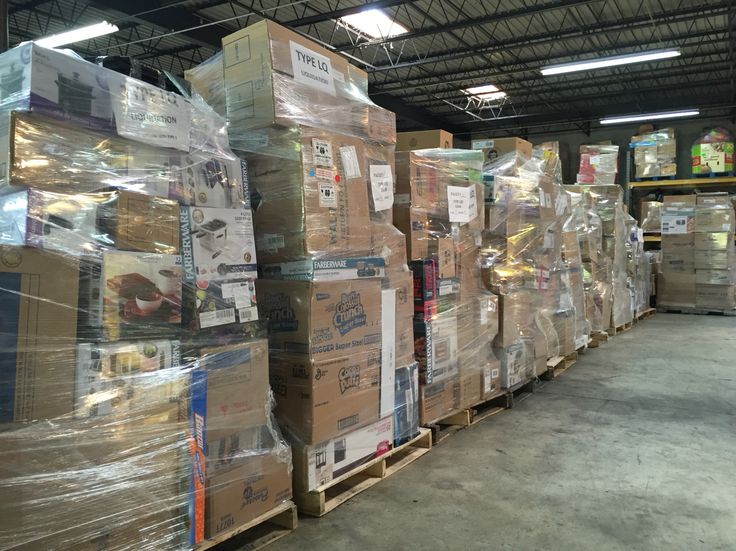
Visual inspection during dock staging provides valuable information for assessing lot condition. Buyers should verify the integrity of the outer stretch wrap, examine the bottom boxes for signs of crushing, check the paper manifests attached to the pallet walls and look out for signs of moisture exposure or liquid leaks.
Buyer Scenario: E-Commerce Reseller Sourcing
- Situation: An e-commerce reseller in Eugene wants to source small consumer tech items with minimum 40% net profit margins.
- Decision: Evaluate a manifested overstock pallet priced at a $1,200 hammer price containing 50 small appliances with an original retail MSRP of $4,500.
- Application: Calculate total landed acquisition cost: $1,200 bid + $180 buyer premium (15%) + $50 dock fee + $120 fuel expense = $1,550 total cost ($31 per item).
- Recommended Action: Verify item resale prices on secondary channels, confirming an average realistic resale value of $68 per working unit after platform merchant fees.
- Resulting Outcome: Generates $3,400 in gross revenue, yielding $1,850 in net profit ($37 per unit), exceeding the minimum target margin threshold.
What Warning Signs Should Buyers Watch For With Pallet Liquidation In Oregon
Visual red flags can indicate potential inventory loss and a lower overall yield. Double-wrapped stretch film, torn plastic, missing retailer security tape and disorganised stacking often suggest cherry-picked lots, where valuable items have been removed prior to the auction.
Misleading manifest entries also pose a risk to bulk buyers. Generic descriptions, inflated original retail MSRP estimates and outdated catalogue values can obscure the actual market value. Rather than relying on historical MSRP figures, buyers must verify exact model numbers against current secondary market completed listings.
| Visual Staging Parameter | Acceptable Condition Indicator | Severe Red Flag Warning |
|---|---|---|
| Stretch Wrap Condition | Clear, tight, single-factory wrap with intact top cap | Torn, loose, double-wrapped, or spliced outer film |
| Pallet Box Stacking | Straight columns, uniform alignment, flat top deck | Leaning stacks, crushed lower boxes, overhang |
| Inventory Packaging | Original retail boxes, intact factory tape seals | Torn packaging, missing covers, loose parts |
| Manifest Labeling | Clear barcode tags matching online lot documents | Missing tags, hand-written labels, altered SKUs |
What Shipping Options Exist For Pallet Liquidation In Oregon
Self-pickup is the most cost-effective way to transport bulk pallets across Oregon. Local buyers use their own commercial vehicles to collect won lots directly from staging docks, thus avoiding third-party freight charges. However, buyers must adhere to all regional highway commercial transportation rules established by state transit authorities regarding cargo weight limits and securement.
Less-than-truckload (LTL) freight shipping is an option for buyers who lack bulk transport vehicles or whose purchases are situated outside their local driving radius. LTL freight delivery requires a commercial delivery address and the use of liftgate equipment for facilities lacking standard loading docks. It also requires strict scheduling in line with regional freight carriers.
| Transport Method | Payload Capability | Equipment Required | Operational Considerations |
|---|---|---|---|
| Cargo Van / Truck | 1 to 2 Loose Pallets | Ratchet Straps, Moving Blankets | Requires hand-unloading if dock unavailable |
| Heavy Utility Trailer | 2 to 4 Standard Pallets | 10,000 lb Hitch, Cargo Netting | Verified axle weight capacity mandatory |
| LTL Commercial Freight | 1 to 6 Strapped Pallets | Commercial Dock or Liftgate | Pallet height and weight limits enforced |
| Full Truckload (FTL) | 24 to 26 Full Pallets | 53ft Dry Van Semi-Trailer | Requires dedicated industrial staging space |
What Equipment Is Needed To Move Pallets From Pallet Liquidation In Oregon
Transporting wooden pallets safely requires vehicles that are specially designed to support heavy, concentrated payloads. Full-size pick-up trucks, commercial cargo vans, enclosed box trucks and tandem-axle utility trailers are ideal for transporting pallets to bulk buyers in Oregon.
Loading capabilities vary across liquidation facilities. While industrial warehouses provide forklift operators to load open flatbed trailers, it is necessary to unstack items by hand when collecting bulk merchandise using enclosed passenger vans or SUVs.
What Safety Guidelines Should Be Followed For Pallet Liquidation In Oregon
Commercial distribution centres enforce strict safety rules to protect workers and visitors to the warehouse. Those entering active staging docks must wear personal protective equipment that meets state safety standards, including steel-toe safety footwear, high-visibility vests and heavy-duty work gloves.
Securing cargo safely helps to prevent road accidents when it is being transported across Oregon highways. Pallets must be secured to vehicle tie-down points with heavy-duty ratchet straps that are rated for bulk loads. The weight of the cargo must be centred over the vehicle’s axles to ensure braking stability.
What Liability Factors Should Buyers Consider For Pallet Liquidation In Oregon
Once dock transfer documents are signed, buyers assume full financial and legal ownership of purchased merchandise. Liquidation sales carry an absolute no-return policy, meaning that the buyer is immediately responsible for unsalable goods, damaged products and non-working electronics. Unsellable items must be disposed of and recycled in accordance with local electronic waste management guidelines.
Facility property guidelines require buyers to adhere to published warehouse rules when operating vehicles on distribution grounds.
Buyers are still responsible for any damage to physical property caused by their vehicles, trailers or personal equipment during the process of loading them.
Frequently Asked Questions About Pallet Liquidation in Oregon
How Does Pallet Liquidation in Oregon Work For Buyers?
In Oregon, pallet liquidation operates through commercial liquidators who collect overstock, customer returns and shelf pulls from regional retailers. These items are then bundled into wooden lots and sold at online auctions or direct warehouse sales. Buyers can then arrange to pick up the items or have them delivered by freight, sort them by condition, and resell individual products through online marketplaces, local discount retail stores, or bin outlets.
How Can Buyers Tell If A Liquidation Pallet In Oregon Is Worth Buying?
To determine whether a liquidation pallet is worth buying, you need to evaluate manifest accuracy, calculate a realistic resale value on the secondary market, audit the physical condition of the boxes during staging and factor in total landed costs, including buyer premiums, dock charges and transport fuel. Pallets containing recognised brand products with verifiable sales offer the greatest potential for profitable returns.