
Pallet Liquidation In Nevada: Where Can You Find Best Stores
In Nevada, buying liquidation pallets means sorting through returned, overstocked and shelf-pulled merchandise, which is sold at steep discounts by retailers and third-party liquidators. Nevada-based buyers can source pallets via official platforms such as B-Stock, third-party liquidators such as Direct Liquidation, and physical warehouse stores concentrated around Las Vegas. This guide covers where to buy pallets, how much they actually cost, how to evaluate sellers, and what you need to start reselling legally in Nevada.
Table of Contents
Request A Retail Or Bulk Quote In Nevada
Need wholesale pallets in Nevada? Request a free retail or bulk quote today. We’ll provide competitive pricing, available inventory, and shipping options within 24 hours.
Fast Shipping And Logistics
- Orders typically ship within 2–4 business days.
- FTL and LTL shipping available across the U.S. and selected export destinations.
- Pallets are securely wrapped for safe delivery, with manifests available upon request.
- International shipping quotes are available for port or direct freight delivery.
-
PET PALLETS
Buy Pallet of Dog Food for Sale: Bulk Pet Nutrition Lots
$899.00 Add to cartRated 4.50 out of 5 -
Food Pallet
Buy Pallet of Flour Liquidation Wholesale Lots
$360.00Original price was: $360.00.$350.00Current price is: $350.00. Add to cart



Key Takeaways
- Nevada’s liquidation pallet market centers on Las Vegas, with sourcing options split between official retailer platforms, third-party liquidators, and local warehouse stores.
- Official platforms like B-Stock offer verified inventory from named retailers, while third-party liquidators provide smaller lot sizes with less consistency.
- Pallet prices vary widely by category and condition, and the purchase price is only one component of your total cost.
- Nevada requires a Sales Tax Permit from the Department of Taxation before you can legally buy wholesale for resale.
- Inspecting pallets in person at local stores reduces risk compared to buying sight-unseen from online auctions.
- Always verify a seller’s return policy, manifest detail, and independent reviews before committing money.
Pallet Liquidation In Nevada
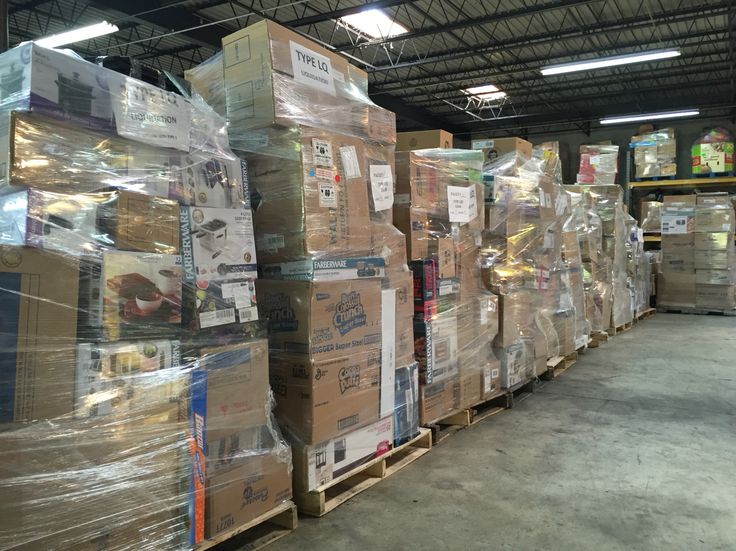
Pallet liquidation connects buyers with retailers looking to quickly sell off excess stock. These goods are customer returns, seasonal overstock or items removed from the shelves, and are grouped onto standard pallets and sold at prices well below the original retail price. Nevada is located along major western shipping routes, with Las Vegas in particular benefiting from its proximity to large distribution hubs in southern California.
The buyers in this market range from first-time side hustlers who purchase a single mixed-goods pallet, to experienced resellers who run full e-commerce operations. The inventory is constantly changing as retailers cycle through returns and clearance stock.
However, not every pallet is valuable. For example, a pallet of electronics might contain working tablets alongside water-damaged units with no resale potential. Whether you make a profitable purchase or a loss comes down to three factors: where you source from, which product category you target, and how rigorously you evaluate the listing before bidding.
What Is Pallet Liquidation In Nevada And How Does It Work
Pallet liquidation involves purchasing bulk quantities of unsold, returned or surplus goods, which retailers package onto pallets and sell at a discount to recover some of the original value. Retailers reclaim warehouse space. Buyers gain access to merchandise priced significantly below standard wholesale prices.
The buying cycle is straightforward. First, you register on a liquidation platform or visit a local warehouse. Then, you browse the available lots and review the manifest. This lists individual items, their estimated retail value and their condition grade. You can then either bid at auction or pay a fixed price. Once payment has cleared, you can arrange collection or shipping.
The most important factor is the discrepancy between the manifest description and the actual contents of the pallet. Experienced buyers treat the manifest as a starting point rather than a guarantee. They allow for a certain percentage of unsellable items and focus on categories where even partially damaged goods hold some resale value.
What Steps Should You Follow To Place A Winning Bid
- Register an account on your chosen platform. Most require a valid email, business name, and a resale certificate or tax ID.
- Browse available lots using filters for category, condition, location, and price range.
- Review the manifest carefully. Check item descriptions, condition grades, and estimated retail values. Vague descriptions or missing item counts are warning signs.
- Decide between auction and fixed price. Auctions can land lower prices but carry the risk of losing the lot. Fixed-price listings cost more but offer certainty.
- Set a maximum bid based on your calculated resale margin, not on the manifest’s retail value.
- Confirm payment and arrange logistics. Factor in shipping costs or plan a local pickup window.
A common mistake among new buyers is to bid based on manifest retail value rather than realistic recovery value. For example, a pallet with a manifest value of $5,000 does not necessarily generate $5,000 in sales. Once unsellable items have been accounted for, and time spent sorting has been factored in, along with marketplace fees, recovery rates vary widely by category and seller.
| Step | Action | Common Mistake |
|---|---|---|
| Registration | Create account with valid business credentials | Using a personal account without a resale permit |
| Browsing | Filter by category and condition | Skipping the manifest review |
| Bidding | Set a calculated maximum bid | Bidding emotionally beyond your margin limit |
| Logistics | Arrange pickup or calculate freight cost | Forgetting to include shipping in total cost |
What Are Liquidation Pallets
A liquidation pallet is a shipment of grouped merchandise, stacked on a standard 48×40-inch wooden pallet and containing items that retailers no longer want in their inventory. The contents vary depending on the source and sorting method used, and the condition grades are not standardised across the industry.
Three main content types appear across most liquidation pallets:
- Customer returns: Items sent back by buyers. Condition ranges from unopened to heavily used or missing parts.
- Shelf pulls: Products removed from retail shelves due to packaging damage, seasonal rotation, or clearance. Generally in better condition than returns.
- Overstock: Excess inventory the retailer ordered beyond demand. Typically brand new and sealed.
The table below clarifies the common condition grades that you are likely to encounter. However, please note that sellers may define these terms differently.
| Condition Grade | Typical Meaning | Expected Resale Potential |
|---|---|---|
| New/Sealed | Unopened, original packaging intact | Highest resale value |
| Like New/Open Box | Opened but unused or barely used | Strong resale value with honest listing |
| Tested Working | Functional but may show cosmetic wear | Moderate resale value |
| Salvage/For Parts | Non-functional or missing key components | Low or no resale value; parts recovery only |
Sorted category pallets (e.g. ‘Electronics, Customer Returns’) enable targeted listing on a single marketplace. In contrast, mixed general merchandise pallets contain items across multiple categories, requiring significantly more time for sorting and listing.
What Official Platforms Sell Liquidation Pallets In Nevada
Official liquidation platforms work directly with, or on behalf of, major retailers. They provide accurate inventory descriptions, a consistent supply and a structured buying process. Competition among buyers tends to be higher on these platforms, which can result in auction prices exceeding those charged by third-party sources.
The table below compares the three main sourcing channels available to buyers in Nevada.
| Factor | Official Platform | Third-Party Liquidator | Local Store |
|---|---|---|---|
| Inventory trust level | High; sourced directly from named retailers | Moderate; varies by company reputation | Variable; inspect in person to verify |
| Price range | Moderate to high due to competition | Lower entry points; markup varies | Negotiable; walk-in pricing possible |
| Minimum purchase | Often truckload or multi-pallet minimums | Single pallets commonly available | Single pallets or individual items |
| Inspection before purchase | No; buy sight-unseen from manifests | No; manifest-based purchasing | Yes; physical inspection available |
| Shipping logistics | Buyer arranges or pays freight | Platform-arranged or buyer pickup | Local pickup; no shipping needed |
How Does Amazon Liquidation Auctions Work For Buyers
Amazon operates an official liquidation auction platform, on which approved business buyers can bid on surplus, returned and overstocked inventory from Amazon fulfilment centres. Listings are categorised by type and condition, and each lot includes a manifest.
Participation usually requires a registered business and proof of resale authorisation. The platform uses a competitive auction format, with prices starting low but increasing for popular categories. The advantage is clear inventory provenance through Amazon’s supply chain. However, there is a risk that a meaningful portion of items may be opened, used, or incomplete due to Amazon’s high customer return rate.
What Does B-Stock Offer Nevada Buyers
B-Stock is a managed marketplace which partners directly with major retailers to run official liquidation storefronts. Retailers such as Walmart and Target operate branded storefronts on the platform, providing buyers with visibility of inventory origin.
Buyers can filter listings by category, condition, lot size and location. Depending on the retailer storefront, both auction and fixed-price formats are available. For buyers in Nevada, the primary consideration is shipping logistics, since many lots are shipped from warehouses outside the state. Make sure you factor in freight costs before bidding.
What Third Party Liquidators Operate In Nevada
Third-party liquidators purchase surplus inventory in bulk from retailers and distribution centres, and then sell it on in smaller quantities. While this adds a markup, it also makes single-pallet purchases accessible to smaller buyers.
The level of trust varies significantly among third-party sellers. Established companies maintain transparent manifests, published return policies and verifiable customer reviews. Less reputable operators, on the other hand, use vague listings, refuse to share manifests and offer no dispute resolution. Due diligence is therefore more important when sourcing from third parties than from official platforms.
What Does Direct Liquidation Offer Nevada Buyers
Direct Liquidation offers mixed-category and sorted customer-return pallets of electronics, apparel, home goods and general merchandise. Listings typically include manifests with item descriptions and estimated retail values.
The company sources products from multiple retail and e-commerce channels, which provides variety, but also means that the contents of the pallets are less predictable than those sourced from a single retailer. A pallet assembled from mixed warehouse clearance will contain a wider variety of items than one sourced from a single retailer’s returns programme. Before purchasing, confirm the origin of the pallet when the manifest allows it.
How to evaluate any third-party liquidator before buying:
- Check for a published return or dispute policy
- Look for reviews on Google, Trustpilot, and reseller forums
- Verify a physical business address exists
- Confirm the manifest lists individual items, not just vague category descriptions
Where Can You Find The Best Liquidation Pallet Stores Near Las Vegas
Las Vegas is at the heart of Nevada’s liquidation pallet market. The city’s population, retail volume driven by tourism, and access to shipping corridors support multiple physical warehouse stores and online-local hybrid sellers.
One critical advantage of physical stores is that you can inspect pallets before purchasing them. You can assess the condition of the packaging, check for visible damage and sometimes open individual boxes on site. This significantly reduces the risk associated with buying sight-unseen from online auctions.
Which Stores Rank Among The Top Liquidation Pallet Sellers In Las Vegas
Las Vegas liquidation stores fall into three main categories. As store availability and inventory change frequently, it is advisable to verify the current status through Google Maps reviews and local reseller community groups before visiting.
- Warehouse-style outlets that receive weekly shipments from major retailers and allow walk-in browsing.
- Appointment-only sellers that offer curated, category-specific pallets with detailed manifests.
- Online-local hybrid stores that list inventory on social media and offer Las Vegas warehouse pickup.
The most reliable stores have several things in common: they restock regularly, grade the condition of their items honestly, display visible customer reviews, and have a clear returns or disputes policy. Avoid any seller who refuses to provide a manifest, pressures you into making an immediate purchase, or has no public review history.
How Much Do Liquidation Pallets Typically Cost
Pricing depends on the product category, the condition of the item, its manifest retail value and the sourcing channel. The price ranges below are based on data from multiple platforms and should be verified against current listings before making a purchase.
| Category | Typical Pallet Cost | Key Pricing Factor |
|---|---|---|
| Mixed general merchandise | $100 to $300 | Lower demand, higher sorting effort |
| Electronics (customer returns) | $200 to $600 | Higher demand, higher defect risk |
| Home goods and kitchen | $150 to $400 | Moderate demand, bulky shipping |
| Apparel and accessories | $100 to $250 | Lower cost but high competition on resale |
The purchase price is only one component of your actual cost. A realistic profit calculation includes five variables:
- Pallet purchase price
- Shipping or pickup cost (freight can add $50 to $200+ depending on distance)
- Unsellable item losses (a portion of every pallet will not be resellable)
- Marketplace selling fees (platforms like eBay typically charge approximately 10% to 15%)
- Your time for sorting, testing, photographing, and listing
Seasonal timing also affects pricing. The post-holiday period (January to March) and late summer are often characterised by higher pallet volumes, as retailers clear returns and make room for new stock. This can result in lower per-pallet costs during these periods.
Use Case 1: First-Time Buyer
A Las Vegas resident with $250 to spend purchases a mixed general merchandise pallet from a local warehouse store. After sorting 80 items, roughly 60 are in sellable condition. She lists them on Facebook Marketplace and a local swap meet over four weekends. Total sales reach approximately $400. After subtracting the $250 pallet cost and $30 in supplies, her gross profit is around $120, not counting her time. She learns which categories sell fastest locally and adjusts her next purchase accordingly.
Use Case 2: Experienced Reseller
A part-time reseller with an established eBay store bids on a sorted electronics pallet through B-Stock for $450. The pallet contains 35 items. After testing, 25 are functional. He lists them on eBay over two weeks, generating approximately $900 in sales. After eBay fees (~13%), shipping supplies ($60), and the pallet cost, his gross profit is roughly $273. His advantage is product knowledge: he knows which electronics models hold value and which are not worth listing.
How Can You Start A Side Hustle With Wholesale Liquidation In Las Vegas
Starting a resale side hustle with liquidation pallets requires a structured approach beyond simply buying cheap.
- Obtain a Nevada Sales Tax Permit. The Nevada Department of Taxation requires a Sales Tax Permit before you can legally purchase goods for resale. This permit is also called a resale certificate. Many liquidation platforms require it during registration.
- Register your business. If operating under a business name, register with the Nevada Secretary of State. A sole proprietorship or LLC are common starting structures.
- Set a budget for your first pallet. Start in the $100 to $300 range. Do not overcommit before understanding the process.
- Choose a sourcing channel based on your risk tolerance and experience level.
- Pick a product category you understand. Familiarity helps you spot value and identify unsellable items faster.
- Sort, test, and photograph everything. List items honestly with clear photos and accurate condition descriptions.
- Select resale channels. eBay, Facebook Marketplace, Mercari, and local flea markets or swap meets are common options.
- Track every cost and sale. A simple spreadsheet monitoring buy cost, fees, shipping, and sale price per item reveals whether your sourcing strategy is actually profitable.
Without tracking, it is impossible to determine whether a $200 pallet that generated $500 in sales was actually profitable once fees, supplies and your time had been taken into account. Many beginners mistake revenue for profit.
Where Can You Search For Liquidation Pallets In Popular Nevada Locations
Although Las Vegas dominates the Nevada liquidation market, buyers in Reno, Henderson, North Las Vegas and Sparks can also find stock through local warehouse stores, regional third-party liquidators and online platforms offering Nevada-based collection.
Search effectively by combining these methods:
- Use platform filters to set a location radius around your city
- Search Google Maps for “liquidation pallets near [your city]”
- Join local Facebook groups focused on Nevada liquidation and resale, where members share real-time inventory drops and seller reviews
- Compare at least three sellers before buying, since pricing on similar pallets can vary by 30% or more within the same metro area
What Should You Know Before Choosing A Liquidation Pallet Source
Before committing money to any source, work through this readiness checklist.
Pre-Purchase Readiness Checklist:
- Do I have a Nevada Sales Tax Permit?
- Have I set a firm budget I can afford to lose on my first purchase?
- Have I verified this seller’s reviews on Google, Trustpilot, or reseller forums?
- Does the seller publish a return or dispute policy?
- Does the listing include an itemized manifest with condition grades?
- Have I calculated total cost including shipping, fees, and expected losses?
- Do I have storage space for sorting and staging inventory?
- Have I chosen at least one resale channel and understand its fee structure?
Common scam warning signs to watch for in liquidation:
- Sellers requesting payment through wire transfer, gift cards, or cryptocurrency only
- Listings with no itemized manifest and only a total retail value claim
- Websites with no verifiable physical address or contact information
- Prices that seem dramatically below market norms with no clear explanation
- Pressure tactics urging immediate payment before you can research the seller
The Federal Trade Commission’s guidance on avoiding scams applies broadly to any bulk purchasing situation where upfront payment is required before receiving goods.
Branching Quiz: Which Liquidation Sourcing Channel Fits You?
Question 1: What is your budget for your first pallet purchase?
- A) Under $200 → Go to Question 2
- B) $200 to $500 → Go to Question 3
- C) Over $500 → Go to Question 3
Question 2: Do you want to inspect the pallet before purchasing?
- A) Yes → Result: Start with a local Las Vegas warehouse store. Low cost pallets with in-person inspection minimize your risk while you learn.
- B) No, I am comfortable buying online → Result: Try a third-party liquidator offering single mixed-goods pallets. Filter for the lowest-cost lots in general merchandise to keep your first investment small.
Question 3: Do you have experience reselling a specific product category (electronics, apparel, home goods)?
- A) Yes → Result: Use an official platform like B-Stock or Amazon Liquidation Auctions. Filter for your category expertise. Your product knowledge will help you evaluate manifests accurately and maximize recovery.
- B) No → Result: Start with a local store or a low-cost mixed pallet from a third-party liquidator. Build category knowledge with a small investment before committing to higher-cost sorted pallets.
This quiz provides general guidance only. Verify current platform availability, pricing, and requirements before purchasing.
Frequently Asked Questions About Pallet Liquidation In Nevada
How Does Pallet Liquidation In Nevada Work?
Pallet liquidation in Nevada brings together buyers and retailers or liquidators selling returned, overstock or shelf-pulled merchandise in bulk at discounted prices. Buyers can either register on the platform or visit a local warehouse to review the available lots and manifests before purchasing via auction or fixed pricing. Pallets can be collected locally or shipped to the buyer.
What Factors Affect The Price Of Liquidation Pallets?
The price of a pallet is influenced by the product category, item condition, manifest retail value, sourcing channel and shipping logistics. Electronics and branded goods tend to be more expensive than mixed general merchandise. Working items that have been tested command higher prices than untested customer returns. Buyer premiums on auction platforms also add to the final cost.
Do I need a business license to buy liquidation pallets in Nevada?
Yes. Nevada requires a Sales Tax Permit from the Department of Taxation for anyone purchasing goods for resale. Many liquidation platforms also require proof of resale authorization during account registration. You may also need to register your business with the Nevada Secretary of State depending on your business structure.