
Pallet Liquidation in Kentucky: Buy The Best General Pallets
Are you trying to source inventory without paying wholesale or retail prices? Pallet liquidation in Kentucky lets you buy customer returns, overstock, shelf pulls, and excess inventory at a fraction of its original value. This guide explains how to source, evaluate, and transport liquidation pallets in Kentucky. You will learn exactly what to look for, how to calculate real cost, and where to find trustworthy suppliers near you.
Table of Contents
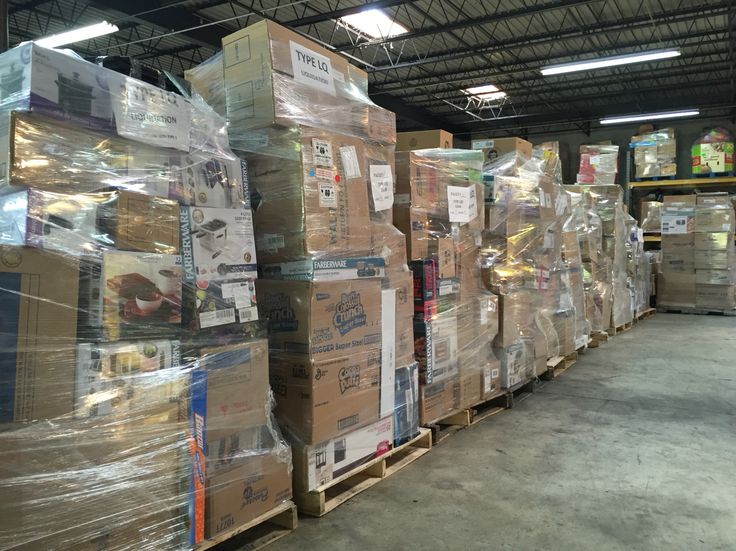
Request A Retail Or Bulk Quote In Kentucky
Need wholesale pallets in Kentucky? Request a free retail or bulk quote today. We’ll provide competitive pricing, available inventory, and shipping options within 24 hours.
Fast Shipping And Logistics
- Orders typically ship within 2–4 business days.
- FTL and LTL shipping available across the U.S. and selected export destinations.
- Pallets are securely wrapped for safe delivery, with manifests available upon request.
- International shipping quotes are available for port or direct freight delivery.
-
CLOTHNG PALLETS
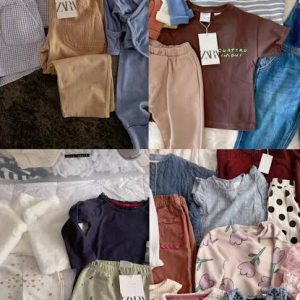
Buy Zara Clothing Pallet In USA ( 200 Piece for $950)
$950.00 Add to cartRated 4.50 out of 5 -
CLOTHNG PALLETS
Buy Zara Clothing Pallet In USA: From $1,750 | Apparel Lot
$1,750.00 Add to cartRated 4.67 out of 5

Key Takeaways
- Pallet liquidation provides access to diverse inventory at prices far below wholesale, including customer returns, overstock, and shelf pulls.
- Calculating your landed cost is essential: it includes the purchase price plus freight, labor, storage, platform fees, taxes, and a damaged-item allowance.
- Buying locally in Kentucky saves on shipping and allows for in-person inspections, but the nearest supplier is not always the best fit.
- No single supplier works for everyone. Success depends on your niche, budget, storage capacity, and resale channel.
Pallet Liquidation in Kentucky
Pallet liquidation is the process of buying large quantities of returned, overstocked, or discontinued merchandise sold on pallets. These goods flow into the Kentucky resale market through a structured chain. Major retailers send customer returns and excess inventory to liquidation companies. These companies sort, grade, and palletize the goods, then sell them to resellers at a discount.
This approach lets you acquire products at a lower cost than traditional wholesale purchasing. For resellers, discount store owners, and side-hustle sellers, that means better margins. But this opportunity comes with tradeoffs. You must manage variable product conditions, check manifest accuracy, arrange freight, and find buyers for the mix of products you receive.
Pallet liquidation is not a passive model. It requires a plan for sorting, testing, cleaning, listing, and selling your inventory. The process can be physically demanding, financially risky, and time-consuming. That is why the rest of this guide focuses on practical steps you can take to reduce that risk.
What Are Wholesale Liquidation Pallets?
Wholesale liquidation pallets are a direct supply source for resellers. They differ from buying individual products, case lots, or full truckloads in important ways. You are not picking specific items. You are purchasing a fixed assortment of goods that may be mixed by category, condition, and brand.
| Pallet Type | What It Contains | Typical Buyer | Key Consideration |
|---|---|---|---|
| Individual products | Single units | Consumers | Highest cost per item |
| Case lots | Bulk of one product | Retailers | No variety |
| Liquidation pallet | Mixed assortment on one pallet | Resellers | Requires sorting and testing |
| Full truckload | Entire palletized trailer | Established resellers, warehouse owners | Requires capital and storage space |
Each pallet falls into a condition category. Understanding these grades is critical to assessing risk before you bid:
| Condition Grade | Description | Resale Implication |
|---|---|---|
| New | Original packaging and tags | Highest potential resale value |
| Overstock | Unopened, unsold items | Similar to new, often older products |
| Customer returns | Returned by customers | May be complete or missing parts |
| Shelf pulls | Removed from store shelves | Damaged packaging or discontinued items |
| Salvage | Significant damage or missing parts | Often sold for parts or repair only |
A manifest is a digital document that lists the products, estimated quantities, and condition codes on each pallet. It also shows the estimated retail value (ERV). The manifest is your primary tool for evaluating a pallet before you buy it. That is why reviewing the manifest is essential: it tells you what you are actually paying for.
To determine whether a deal is actually profitable, you must calculate your landed cost. The landed cost includes every expense you will incur to get the inventory ready for sale:
Here is a practical example. A $250 pallet of customer returns with a $1,200 ERV seems like a good deal. But suppose you pay $80 in freight, spend four hours sorting and testing items, and lose $100 to damaged goods. Your true cost is $510 plus the value of your time. Your actual profit might be far lower than the ERV suggested. Always run this calculation before you commit.
What Can Buyers Expect From Kentucky Liquidation Pallets And Truckloads?
Your choice between a single pallet, a partial truckload, and a full truckload depends on your budget, space, experience, and ability to move inventory quickly.
| Load Type | Budget Requirement | Storage Requirement | Best For |
|---|---|---|---|
| Single pallet | $150 to $500 | Garage or spare room | First-time buyers, testing a supplier |
| Partial truckload (LTL) | $500 to $2,000 | Large space or small warehouse | Intermediate buyers, group purchasing |
| Full truckload | $3,000 to $10,000 | Warehouse with pallet racking | Established resellers, store owners |
The appeal of larger loads is the lower per-unit cost. But larger loads also increase your financial exposure. If a truckload contains 60% clothing and you do not sell clothing, you have a problem. That is why you should evaluate load quality through photos, manifests, inspection opportunities, and seller disclosures before you commit.
Before buying any load, answer these questions:
- Do I have the equipment (pallet jack, forklift) to unload it?
- Do I have the labor to sort, test, and list everything?
- Do I have a resale channel for all the categories in the load?
- How long will it take me to sell through this inventory?
Do You Understand Your Buyer Profile?
Take this short branching quiz to identify the right load type for your situation.
Question 1: What is your current experience with reselling?
- A) I have never sold anything online or in person.
- B) I have sold a few items on eBay or Facebook Marketplace.
- C) I sell regularly and have a defined resale process.
If A: Review the “Where Are The Best Places To Buy Pallets For Flipping?” section before buying anything. Start with a small single pallet in a category you know well.
If B: Continue to Question 2.
If C: Continue to Question 3.
Question 2: How much space do you have for inventory?
- A) A room in my house or apartment.
- B) A garage, basement, or small storage unit.
- C) A dedicated warehouse or large commercial space.
If A: Start with a single pallet or a category-specific lot.
If B: You can handle a partial truckload or multiple pallets.
If C: Continue to Question 3.
Question 3: What is your typical monthly resale volume?
- A) Less than $1,000
- B) $1,000 to $5,000
- C) More than $5,000
If A: Buy single pallets or category-specific lots while you build your process.
If B: You can handle partial truckloads or multiple pallets per month.
If C: You are ready for full truckloads and recurring supplier relationships.
This is a simple framework, not a guarantee. Your specific situation will always require judgment.
What Are General Merchandise Truckloads?
A general merchandise truckload is a full trailer of mixed retail goods. It includes a variety of categories, typically home goods, apparel, electronics, beauty products, household items, tools, and sometimes toys. The mix varies by supplier, season, and the retailer’s return volume.
This mix appeals to several types of buyers. A discount store owner finds household items and shelf pulls. An online seller picks through electronics and high-value apparel. A flea market vendor uses lower-priced household goods. The key advantage is that you are not betting on a single category. The risk comes from category concentration: a load that is 60% clothing and 40% everything else can hurt you if you do not sell clothing.
Seasonality plays a major role in truckload buying. Christmas PALlets Liquidation and Toys Truckloads start appearing in late summer and fall. If you buy a toy truckload in November, you have a short window to move the inventory before demand drops sharply after the holidays. Always ask about the seasonality of the items in the load and whether you have the storage to hold them until demand peaks.
What Is Amazon Pallet Liquidation In Kentucky?
Amazon pallet liquidation in Kentucky involves buying pallets or truckloads of returned and overstocked inventory from Amazon’s network. Amazon uses an approved network of liquidators who buy this inventory and resell it to smaller buyers. This is a high-volume, high-risk, high-reward channel.
Amazon uses a grading scale for its returns. Each grade reflects the condition of the items and the likely resale difficulty:
| Amazon Grade | What It Means | Likely Condition |
|---|---|---|
| Grade A | Customer returns in excellent condition | Original packaging, all parts present |
| Grade B | Good condition with minor cosmetic damage | Some wear, packaging damage possible |
| Grade C | Fair condition, significant damage or missing parts | Needs repair, cleaning, or parts sourcing |
| Grade D | Poor condition, potentially unsellable as-is | Salvage or parts only |
Amazon’s manifest shows condition grades for categories, not for each individual item. That distinction matters for your pricing decisions. You are buying a range of conditions, not a guaranteed list of sellable products.
The risks are common and predictable: incomplete products, damaged packaging, items restricted from certain resale platforms, electronics that do not work, and missing accessories like chargers or cables. Always count on a percentage of the load being unsellable as-is. Estimate your repair and cleaning costs before you buy, not after.
Where To Buy Pallets Of Merchandise In Northern Kentucky?
Northern Kentucky buyers have several practical sourcing routes. The right option depends on your volume and how much risk you want to take.
| Sourcing Route | Best For | Key Advantage | Tradeoff |
|---|---|---|---|
| Liquidation warehouses | All buyer levels | In-person inspection possible | Inventory varies by day |
| Local auctions | Store owners, experienced resellers | Unique lots, sometimes better pricing | Time-sensitive bidding |
| Wholesale distributors | Established businesses | Consistent supply | Higher minimum orders |
| Online marketplaces | Test buyers, beginners | Wide selection | Can’t inspect pallets |
| Regional freight sellers | Full truckload buyers | Lowest per-unit cost | Requires warehouse space |
To verify a supplier, start with their physical location. Can you visit them? Do they have a real business address with a permanent building? A legitimate supplier will have clear processes for viewing inventory, scheduling pickups, and processing returns. You should also ask these questions before your first purchase:
- “Can you send me the manifest for the pallet I am considering?”
- “What condition codes are in your manifest system?”
- “What is your return or dispute policy?”
- “What is the minimum order quantity?”
- “Do you offer loading services, or do I bring a pallet jack?”
- “Do you accept credit cards or bank transfers?”
Buying locally in Northern Kentucky saves on freight and lets you inspect the pallet personally. But “local” does not guarantee a good supplier. You still need to verify inventory quality and service level before you commit.
Where To Find Liquidation Warehouses In Louisville Kentucky?
Louisville is a regional logistics hub, so it attracts several liquidation warehouses. To find them, search Google Maps for “liquidation warehouse” and “pallet liquidation Louisville KY.” You can also review the Better Business Bureau’s website (https://www.bbb.org/) to check for disputes and accreditation status.
Before you drive to any warehouse, confirm the basics: opening hours, appointment requirements, current inventory availability, and accepted payment methods. A professional operation will have clear product descriptions, documented policies, transparent pricing, and accessible contact information. Those signals matter as much as the advertised prices.
| Operational Signal | Professional Supplier | Unclear Supplier |
|---|---|---|
| Product descriptions | Detailed, accurate manifest | Vague or missing product info |
| Condition grading | Clear condition codes | No grading description |
| Payment methods | Credit card, bank transfer | Cash or wire transfer only |
| Dispute policy | Written process for issues | No published policy |
| Contact ability | Responsive phone/email | Slow or generic responses |
A warehouse visit lets you see the physical packaging, check the pallet organization, and evaluate merchandise quality before you buy. It also helps you build a relationship with the owner or manager, which can lead to better pricing and first access to new loads.
How Does Freight And Pickup Work For Pallet Liquidation Louisville KY?
Freight is often the largest hidden cost in pallet liquidation. A freight quote depends on several factors: pallet dimensions, total weight, destination, freight class, delivery distance, and accessorial charges. Freight class is determined by a standardized system known as the National Motor Freight Classification (NMFC). It measures density, handling, stowability, and liability, and it assigns each product type a class from 50 to 500. Higher classes cost more to ship.
For Kentucky buyers, this translates into a few simple rules:
- LTL (Less-Than-Truckload) is best for single pallets and partial truckloads.
- Shared freight can be very cost-effective if you can coordinate with other local buyers.
- Full truckload transportation is a fixed price and becomes cheaper per pallet as volume increases.
- Always ask for a truckload quote from a licensed freight broker.
| Transportation Option | Cost Range | Best For | Additional Considerations |
|---|---|---|---|
| LTL shipment | $80 to $200 per pallet | Single pallets, partial loads | Residential delivery adds liftgate fee |
| Shared freight | $50 to $150 per pallet | Coordinated group purchases | Requires scheduling and coordination |
| Full truckload | $1,500 to $3,500 | Full trailer purchases | Cheapest per pallet but requires dock |
Pickup options vary by warehouse. Some require appointments; others accept walk-ins. You will need a box truck or trailer, a pallet jack, and a valid ID. Plan to inspect the pallet before it is loaded onto your vehicle. Some warehouses charge a liftgate fee if your vehicle does not have one. Others charge fees for residential delivery or limited-access locations like schools or gated communities.
What Are The Best Liquidation Pallets Near Elizabethtown KY 42701?
Elizabethtown buyers should focus on finding quality pallets that match their local resale market. The best pallets are defined by accurate manifests, reasonable condition grades, desirable categories, fair pricing, and reliable seller communication.
You can buy from a Louisville warehouse (about 45 minutes away) or find a supplier that ships directly to Elizabethtown via freight. The right choice depends on your comfort with freight costs versus travel time. Transportation costs can change the true value of what appears to be a bargain.
Here is a common calculation for Elizabethtown buyers:
| Scenario | Pallet Price | Freight Cost | Actual Cost | Notes |
|---|---|---|---|---|
| Local pickup | $200 | $0 | $200 | Requires driving to Louisville |
| Shipped from Louisville | $150 | $100 | $250 | Cheaper pallet, higher total |
| Shipped from a distant state | $120 | $300 | $420 | High landed cost |
Check local demand before you commit. Does your target customer in Hardin County buy these items on Facebook Marketplace, at local flea markets, or through a storefront? Match the merchandise to the local buyer, not to a national trend.
What Should Buyers Know About Wholesale Truckload Opportunities In Southern Kentucky?
Southern Kentucky buyers face different conditions than those near Louisville or Cincinnati. The population centers are smaller, so resale outlets are more limited. That changes how you evaluate a truckload opportunity.
A truckload in Southern Kentucky makes sense only if you have adequate capital, storage space, unloading capacity, sorting labor, and a defined resale plan. Without all three, a truckload will overwhelm you. The equation is straightforward:
You must include the unit cost, freight, labor hours, packaging materials, platform fees, and your own time in the “Total Costs” side. Do not underestimate the labor required.
A relationship with a regional distributor or freight seller can give you consistent supply. The tradeoff is that you may become dependent on one supplier, and that supplier may specialize in only one category. If that category stops selling well in your area, your recurring relationship becomes a liability instead of an asset.
Where Can Buyers Find Kentucky Merchandise Liquidators Near Me?
Finding the right liquidator is not hard. Finding a trustworthy one takes time. Start with map searches, trade directories, auction listings, reseller groups on Facebook, and supplier websites. Then filter those results for legitimacy.
| Verification Step | What to Check |
|---|---|
| Business license | Ask for the state business registration number |
| Physical address | Confirm it exists and is operational |
| Inventory evidence | Ask for recent photos and sample manifests |
| Payment security | Avoid wire transfer or cryptocurrency payment requirements |
| Dispute process | Get a written policy for damaged or missing items |
A nearby supplier is often preferable to an out-of-state seller, even if the price is slightly higher. You can inspect the pallet, save on freight, and build a relationship. But you should still run the same verification process for a local supplier as you would for a distant one.
Where Are The Best Places To Buy Pallets For Flipping?
The best sourcing channel for your pallets depends on your buyer profile, your budget, and your resale channel. Here are the most common routes:
| Sourcing Route | Best For | Key Advantage | Tradeoff |
|---|---|---|---|
| Liquidation warehouses | All buyer levels | In-person inspection | Inventory varies |
| Retailer auctions | Store owners, experienced resellers | Premium lots | Higher competition |
| Online marketplaces | Beginners | Wide selection | No inspection |
| Surplus stores | Store owners | Low cost on shelf pulls | Limited variety |
| Direct wholesale suppliers | Established resellers | Consistent supply | High minimum orders |
Beginners should start with a manageable pallet in a category they know well. If you are an experienced online seller, start with a pallet of electronics. If you sell vintage clothing, start with an apparel pallet. Your familiarity with the category lets you spot problems faster.
Also, plan your resale route. eBay, Amazon, Poshmark, Facebook Marketplace, flea markets, and local pickup sales all have different fees, turnaround timelines, and ideal item types. A product that sells well on eBay might sit unsold at a flea market. Choose your pallet categories based on your chosen resale channel.
What Are Pallet Lots?
A pallet lot is any group of merchandise sold together on a pallet. The term is often used interchangeably with “pallet.” The difference is descriptive: a “lot” may be a full pallet, a partial pallet, or a mixed collection of items that arrives on multiple pallets.
Lot types include:
- Manifested lots: You know the estimated contents before you buy.
- Unmanifested lots: You do not know the contents until delivery.
- Sorted lots: Items are grouped by category or condition.
- Mixed lots: A random assortment of categories.
- Category-specific lots: A pallet focused on a single type of product.
When comparing lots, focus on the cost per item. A pallet with 100 items for $200 is $2 per item. A pallet with 20 items for $100 is $5 per item. The former is often the better deal if the items have resale value, but only if you can move that volume quickly. Always review the lot description, photographs, seller disclosures, shipping terms, and inspection options before you place a bid.
Which Kentucky Liquidation Companies Should Buyers Compare?
Kentucky has several liquidation companies that appear frequently in search results: Hartland Liquidation, Fire Of God Pallet Liquidation, Amico Pallet Liquidators, Gotta Go Surplus, and Kentuckiana Liquidation And Pallet Sales. You should also consider Orotex Liquidation Warehouse In The United States as an additional supplier category for truckload volumes.
Do not select a supplier based on brand recognition alone. Evaluate each one against the following objective standards:
| Evaluation Criterion | What to Look For |
|---|---|
| Inventory transparency | Are detailed manifests available for every load? |
| Manifest quality | Are the descriptions clear and the condition codes documented? |
| Condition explanations | Does the supplier define its grade system? |
| Customer communication | How fast and how clearly do they answer questions? |
| Payment safeguards | Do they accept credit cards or bank transfers? |
| Fulfillment policies | Are loading procedures and pickup arrangements clear? |
To compare total costs, request a complete quote from each supplier. Include the merchandise cost, freight, pickup fees, taxes, labor, repairs, and expected selling expenses. The cheapest pallet is rarely the cheapest total cost. Only a complete quote gives you an accurate comparison.
How Can Buyers Search Liquidation Pallets In Popular Locations?
A location-search tool helps you filter suppliers by city, ZIP code, merchandise type, purchase volume, and delivery range. Use it for Louisville, Northern Kentucky, Southern Kentucky, Elizabethtown, and nearby regional markets. These are the main population hubs in Kentucky where you will find the bulk of liquidation inventory.
Before you make a trip, confirm inventory availability, warehouse hours, pickup rules, and transportation options. Searching for the nearest result is tempting, but the right fit is more important than the closest location. A warehouse 20 minutes away with poor inventory may be less useful than one 40 minutes away with the right categories and fair pricing.
Use Case: First-Time Buyer in Elizabethtown
Here is a realistic example of how a first-time buyer might apply this guide:
Sam’s situation: Sam lives in Elizabethtown, KY, works full-time, and wants to resell on eBay and Facebook Marketplace as a side income. Sam has a garage for storage and about $300 per month to invest in inventory.
Decision: Sam buys a single pallet of general merchandise from a Louisville warehouse for $220. The manifest shows a mix of home goods, tools, and electronics, with a $1,100 ERV. Freight is $0 because Sam drives to Louisville for pickup. Sorting and testing takes about three hours.
Result: Sam sells approximately 60% of the items on eBay and Facebook Marketplace within six weeks, generating about $550 in revenue. The remaining items are either salvaged, donated, or sold in a bundle. After factoring in the $220 purchase cost, $30 in platform fees, and $20 in packaging materials, Sam’s net profit is roughly $280 for six weeks of part-time work.
Takeaway: This is a modest but real profit. Sam avoided the trap of buying a large truckload before building a sales process.
Frequently Asked Questions About Pallet Liquidation in Kentucky
Where Can You Find Pallet Liquidation In Kentucky Near You?
Louisville, Northern Kentucky, and Elizabethtown are the main hubs for liquidation warehouses and freight sellers in Kentucky. Use map search tools, trade directories, and reseller groups to find current suppliers, but confirm inventory availability and appointment requirements before visiting.
How Do You Find Trusted Pallet Suppliers In Northern Kentucky?
Look for verifiable business details, a physical address, and clear company policies. Ask for detailed manifests and condition definitions. Check online reviews and consider making a small initial purchase to assess their processes before committing to a larger order.